
Commercial LED Display Solutions
The JDX TECH team helps retail stores, shopping malls, showrooms, and branded interior spaces plan commercial LED displays built for stronger visual impact, cleaner integration, and practical long-term operation.
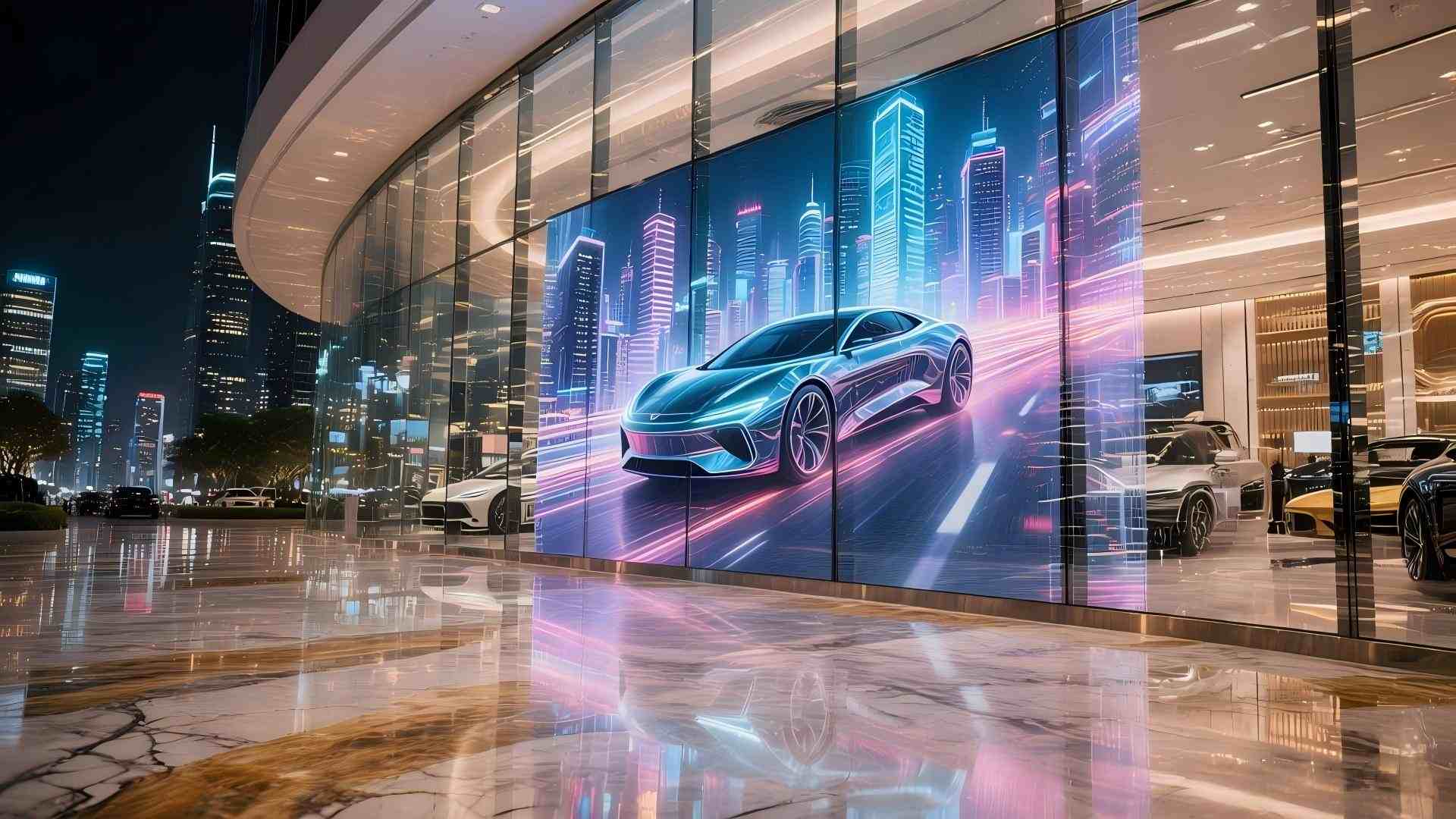
Where commercial LED displays usually create the most value
Commercial LED display projects usually work best when the screen is not just decorative, but tied to real customer attention, product storytelling, navigation, or brand presentation inside a business environment.
Retail stores and shop interiors
A strong fit when brands need product launches, seasonal campaigns, and high-visibility storytelling inside customer-facing spaces.
Shopping malls and atriums
Useful for multi-tenant commercial environments where the display supports traffic attraction, event promotion, and centralized media messaging.
Brand showrooms and experience centers
Best for spaces that need premium visual presentation, close-view detail, and better control over how branded content is experienced in person.
Hospitality and public commercial spaces
Suitable for hotels, lobbies, and mixed-use business spaces where information display, welcome messaging, and interior media impact all matter.
Choosing pixel pitch and viewing distance for a commercial LED display
Pixel pitch is the distance between two adjacent LED clusters, measured in millimetres, and it drives most of the cost on a commercial LED display. Smaller pitch means more LEDs per square metre, a sharper image at close range, and a higher price. The right number is not the smallest one available — it is the largest pitch that still looks smooth from where the audience actually stands or sits.
| Typical application | Comfortable viewing distance | Common pixel pitch |
|---|---|---|
| Boardroom, lobby statement wall | 1.5 – 3 m | P1.2 – P1.8 |
| Showroom, experience centre | 3 – 6 m | P1.8 – P2.5 |
| Retail interior, brand wall | 4 – 8 m | P2.5 – P4 |
| Mall atrium, large-format branding | 8 – 20 m | P4 – P6 |
A practical rule of thumb: keep the viewing distance in metres at roughly 1.5 to 3 times the pixel pitch in millimetres for critical content such as text and product detail, and you can go larger for decorative motion graphics that nobody reads line by line.
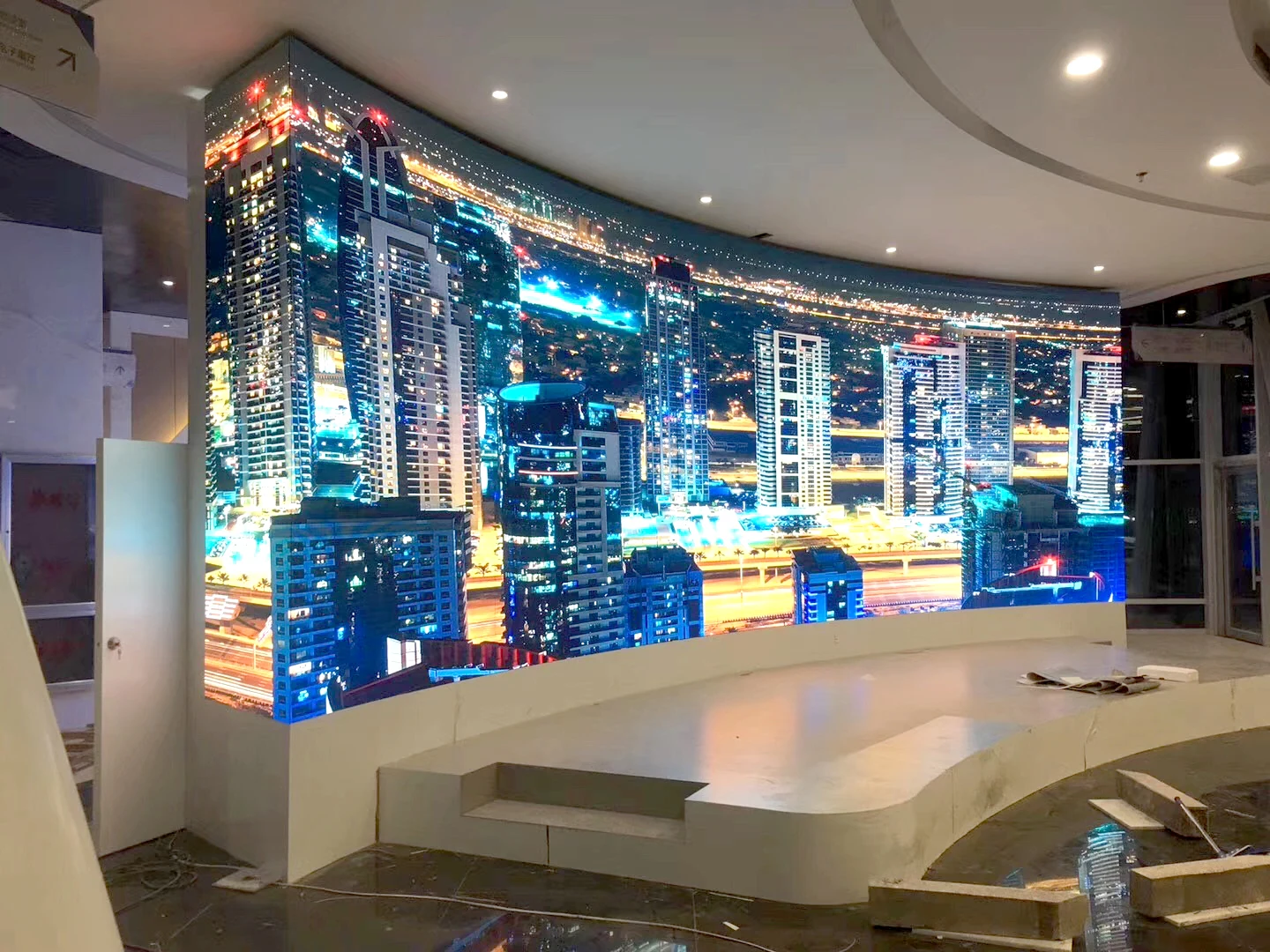
When a smaller pitch is actually worth paying for
Paying for fine pitch only makes sense when the audience gets close, or when the content contains text, data, or fine product imagery that has to stay legible. A showroom wall where a customer can walk up and inspect fabric texture, or a retail window where people read pricing, will justify P1.8 over P2.5.
In a mall atrium where the nearest shopper stands several metres away and the content is moving brand video, the extra resolution is invisible. Spending the same budget on brightness headroom, a more reliable cabinet, or a spare-parts kit will produce a better result for the life of the installation.
If your layout puts viewers closer than 1.5 metres — flagship showrooms, VIP lounges, broadcast-style brand spaces — our fine pitch indoor LED display line covers P0.78 to P1.87 in cabinets under 30 mm deep.
How content type changes the decision
Static menu boards, wayfinding, and promotional text need a pitch that keeps letters crisp from the decision point. Live video and fast motion need a high refresh rate more than they need a small pitch, because the failure mode there is banding and motion blur rather than visible pixels.
Mixed-use commercial spaces usually run both. That is why a single-wall project should be specified against the most demanding content it will ever show, not the average.
Brightness, cabinet structure, and installation method
Brightness and cabinet design are where an indoor commercial display either looks comfortable or looks like a light source. Indoor commercial LED displays are usually specified between 800 and 1,500 nits. A lobby with daylight through glass and a window-adjacent retail wall sit at the top of that range; a dim boardroom or cinema-adjacent corridor sits at the bottom.
Installation method shapes the quote more than the screen
The same panel can be wall-mounted, hung from a truss, or recessed into a joinery cavity, and each option changes the steel, the cable path, and the service access. Confirming the method before pricing prevents the most common mid-project cost surprise.
Front-service magnetic cabinets are the usual choice when the wall has finished surfaces on both sides and there is no rear access. Rear-service cabinets are cheaper and simpler, but they need either a technical corridor or a removable panel behind the screen, which is rarely possible in a finished retail interior.
Depth is the other constraint. A standard indoor cabinet is roughly 60 to 100 mm deep, but a recess with structural framing, power supplies, and a receiving card can push the total build-up well past that. Measuring the available cavity early avoids a redesign at the installation stage.
Front service vs rear service
Front access keeps the screen flush in finished interiors; rear access needs a hidden technical zone. Choose before the wall is built, not after.
Colour consistency across cabinets
On large commercial walls, panels are calibrated as a batch so brightness and colour match across seams after replacement.
Duty cycle and heat load
A display running twelve hours a day in a climate-controlled space behaves differently from one in a glazed atrium; heat and ventilation belong in the plan.
What buyers usually prepare before a commercial LED display quote
Commercial LED display projects become easier to scope when the buyer defines environment type, content goals, installation method, and daily operating expectations early in the process.
Environment type
Boardrooms, showrooms, malls, retail interiors, and hospitality spaces all call for different brightness, cabinet structure, and service approaches.
Content purpose
Brand storytelling, wayfinding, promotion, product launches, and continuous information display all influence the best screen recommendation.
Structure and maintenance
Wall mounting, hanging, front service, and concealed integration should be clarified early so the quotation reflects real site conditions.
Control and update path
A stronger commercial display proposal usually includes how content is updated, how many inputs are needed, and whether the system is centrally managed.
Common questions about commercial LED displays
What pixel pitch do I need for a commercial LED display?
Match the pitch to the closest realistic viewing distance. For boardrooms and close-inspection walls, P1.2 to P1.8 keeps fine text smooth. For retail interiors viewed from four to eight metres, P2.5 to P4 is usually enough. For mall atriums and large-format branding seen from eight metres or more, P4 to P6 performs well and costs significantly less per square metre.
How bright should an indoor commercial LED display be?
Most indoor commercial installations sit between 800 and 1,500 nits. Choose the higher end when daylight reaches the screen, such as a glazed lobby or a window-facing retail wall, and the lower end for controlled-light interiors like boardrooms and showrooms. Running too bright in a dim space creates glare and eye fatigue for staff who work near the wall all day.
What is a typical lead time and minimum order quantity?
For fully custom walls, lead time is typically a few weeks after drawing approval and depends on pixel pitch, cabinet count, and processor configuration. Minimum order quantity is generally one wall, since each commercial LED display project is engineered to the site. Providing drawings, viewing distance, and content type up front shortens the quotation cycle.
Can a commercial LED display be serviced without removing the whole wall?
Yes, if the right cabinet is specified from the start. Front-service magnetic cabinets allow a single module to be pulled from the front with a service tool, which suits finished retail and hospitality interiors. Rear-service systems are easier and cheaper to maintain but require a hidden access corridor or removable panel behind the display.