
LED Video Wall Systems, Built to the Room You Actually Have
An LED video wall is a matrix of LED cabinets tiled to a size you choose, with no seam between modules and no fixed aspect ratio. That freedom is the whole point — and also where most projects go wrong. A wall specified by catalogue size rather than by viewing distance either burns budget on pitch nobody can resolve, or ships a picture that looks soft from row three.
This page is the working version of that decision: four product lines, the pitch-to-distance table we quote from, factory-direct pricing by pitch, and the installation constraints that decide whether your wall hangs, sits, or needs a rear service corridor. JDX TECH has been building these since 2014 and ships them direct — you buy the cabinets, the processor and the spares from the people who assemble them.
- Export markets
- 100+ countries
- Product lines
- 4 lines
- Fastest production
- 15 days
- Smallest pitch
- P0.78
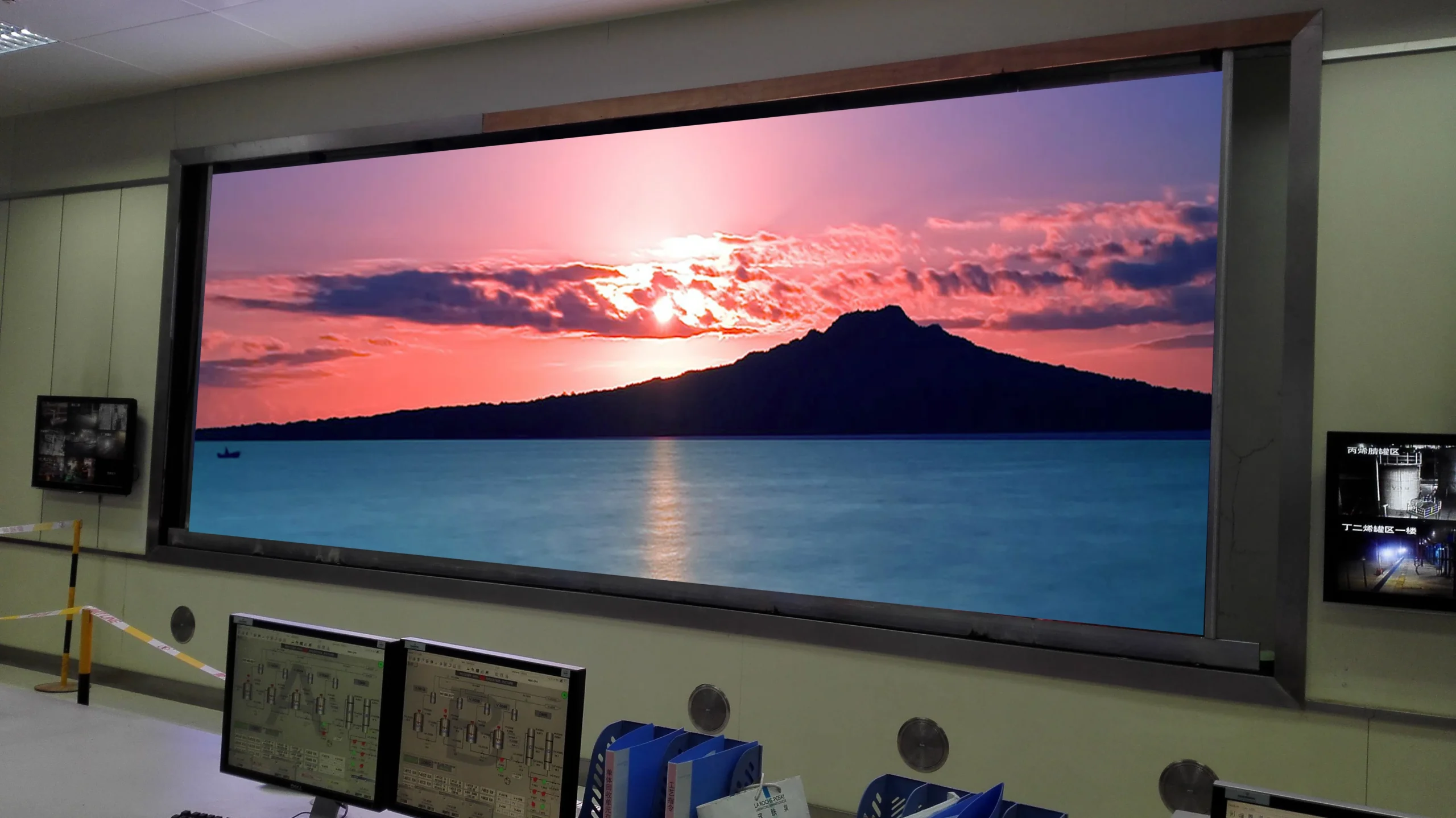
Command centre wall, P1.2, front-service cabinets — the tightest pitch we ship for continuous operation.
What an LED video wall is — and what it is not
An LED video wall is a tiled array of LED display cabinets driven by a video processor. Each cabinet holds a grid of LED modules; the modules butt against each other with a seam measured in tenths of a millimetre, so at normal viewing distance the image reads as one surface. Because the building block is a cabinet rather than a glass panel, dimensions are set by how many cabinets you order — not by a small list of manufactured sizes.
It is not an LCD video wall. An LCD wall is a grid of separate screens; even the narrowest commercial bezel leaves a visible line every panel, and the viewer sees four or nine rectangles rather than one image. It is not a projector either — a projector needs controlled ambient light and a screen surface, and it loses contrast the moment the front of house lights come up. Three differences matter commercially: no seam at any size, brightness from 600 nits indoor to 10,000 nits outdoor, and geometry that can be curved, stepped or cut around a column.
The reason factory-direct pricing works on this product is structural. A local integrator buys cabinets, adds a processor, engineering, install labour, a warranty reserve and margin, then quotes one turnkey number. When you buy from the assembly plant, the cabinet, processor and spares arrive at your port as hardware, and only the local labour is bought locally. The gap is not a discount — it is the removal of one company's overhead from a product that already left the factory once. If you want the mechanics of how a wall is measured and specified before you pick a pitch, read our guide to how LED walls are sized and specified; this page starts one step later, at the point where you know the room and need to choose hardware.
Four product lines, four different jobs
The same word covers a boardroom wall, a highway billboard and a concert stage. What changes is not the brand — it is the pitch, the brightness, the cabinet mechanics and the service path. Each line below lists the specification we actually build, then the mis-selection we see most often on that line.
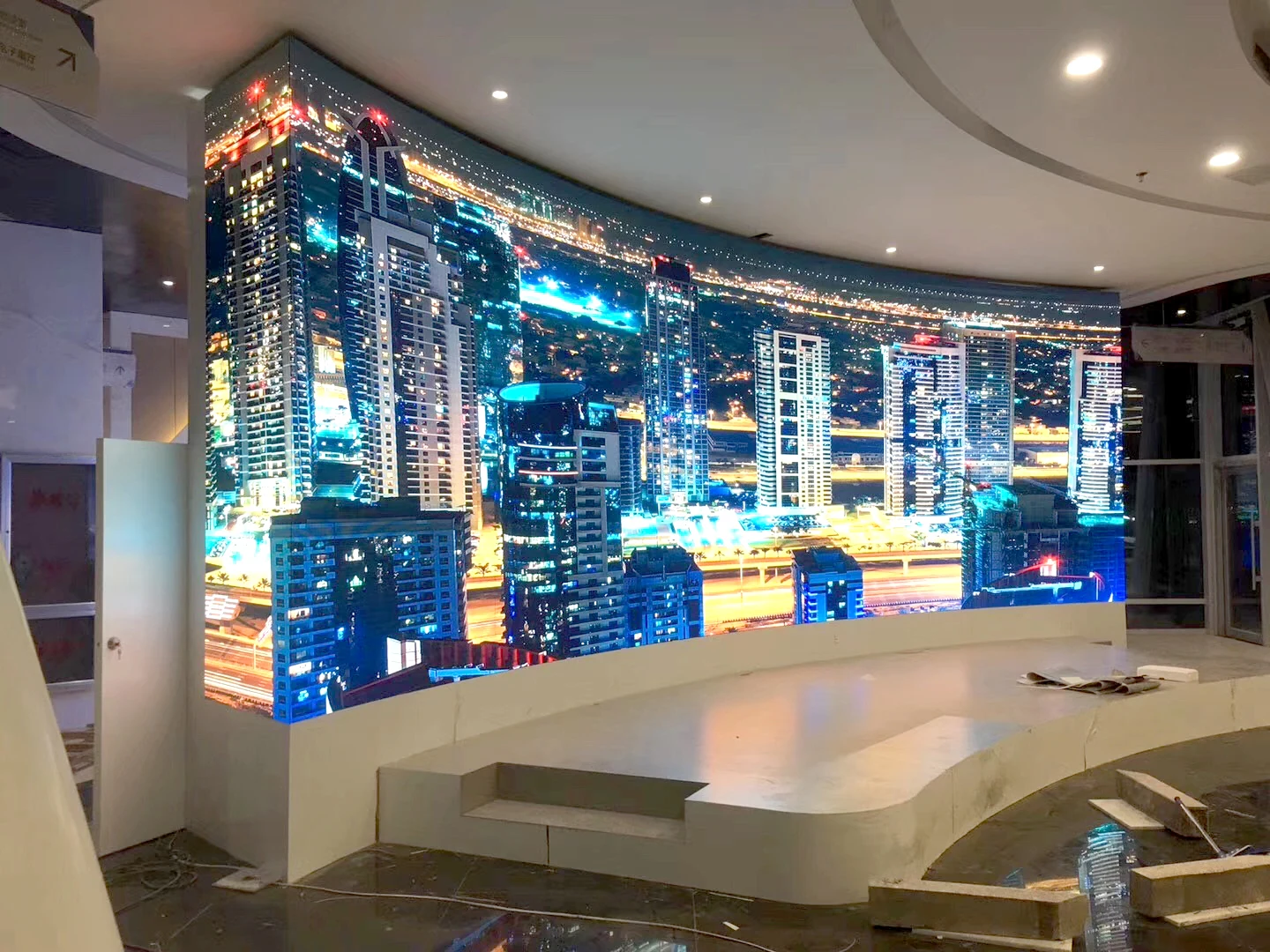
Line 01 · Indoor fixed
Indoor fixed installation, P0.78–P3.91
The job: a permanent wall that people read from 2 to 10 metres, running eight hours a day or twenty-four. Boardrooms, showrooms, lobbies, control rooms, houses of worship, broadcast backdrops. The requirement is not brightness — it is uniformity, low heat and a picture that survives a camera.
Command and dispatch floors have a different brief from retail walls: no visible seams, stable colour at low brightness, and front service that keeps the wall live. We cover the specification side in our 24/7 control room display planning guide.
The spec: 600–1,500 nits, 3,840 Hz refresh, die-cast aluminium cabinets at 600×337.5 mm or 500×500 mm, magnetic front-service modules. Fine pitch (P0.78–P2.5) from $1,350 per m²; Matrix platform (P1.25–P3.91) from $710 per m². The two ranges overlap deliberately — below P1.5 you are paying for COB or MIP packaging, above P1.8 you are paying for cabinet volume.
The usual mis-selection: buying P1.2 for a lobby where the nearest viewer stands 6 metres away. At that distance a P2.5 wall is visually identical and costs roughly a third. Specify by nearest viewing distance, never by the pitch a competitor quoted for a different room.
Line 02 · Outdoor
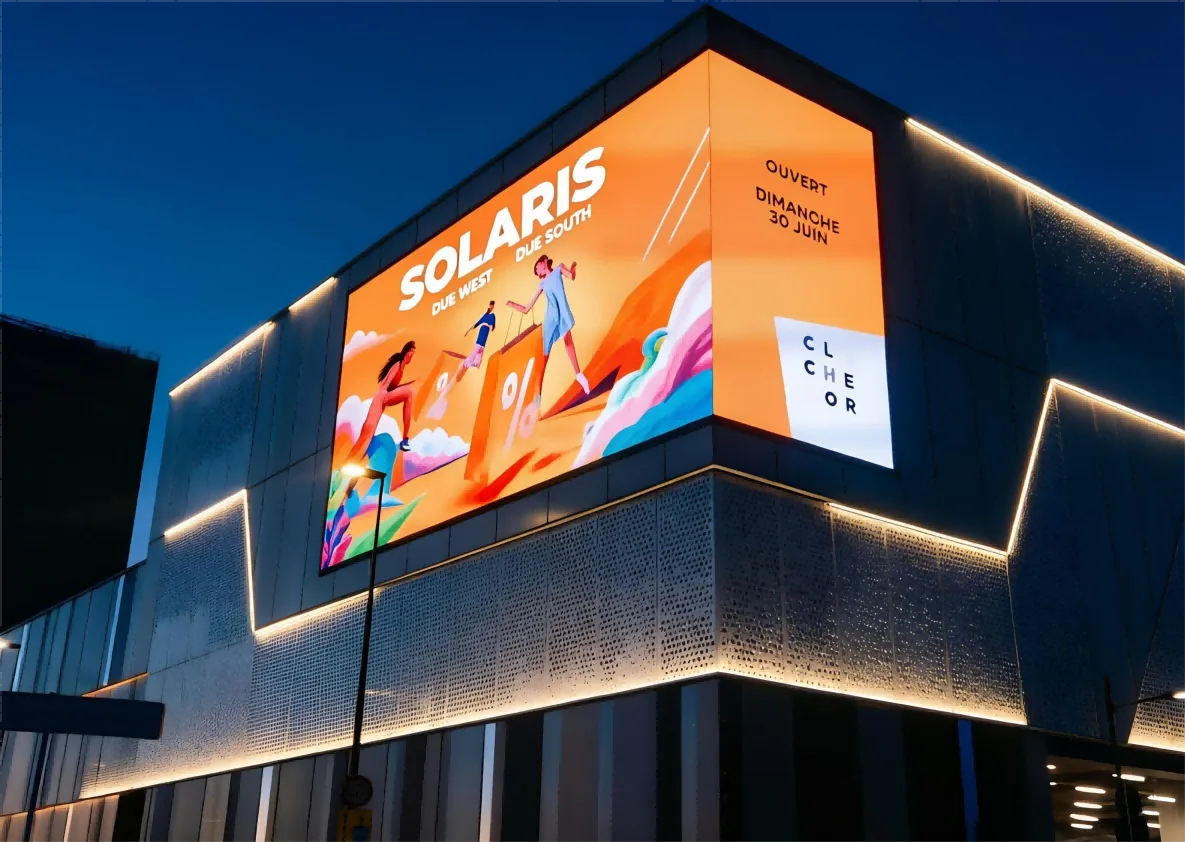
Outdoor display, P4–P16
The job: a wall that competes with the sun. Roadside billboards, building facades, transit hubs, stadium perimeter. Two numbers dominate the specification: peak brightness and thermal design, because an outdoor cabinet runs at 60–70 °C in direct sun and every degree costs LED lifetime.
The spec: 5,000–10,000 nits, IP65 front and rear, 9,600 Hz refresh for camera-facing locations, aluminium cabinet with forced-air or heat-sink cooling. From $615 per m² for P8–P10 on standard cabinet; P4–P6 roughly doubles that because the LED density triples. Automatic brightness sensors are standard, and they are not a convenience — a billboard that runs 10,000 nits at 2 a.m. is a lighting complaint waiting to happen.
The usual mis-selection: choosing P4 for a sign that will be read from 60 metres because the client wants "sharp". At 60 metres the eye resolves about 40 mm; P4 is 4 mm. The extra density goes into cost, weight, wind load and power draw, and nobody sees it.
Outdoor range → Billboard formats → Digital billboard & DOOH →
Line 03 · Rental
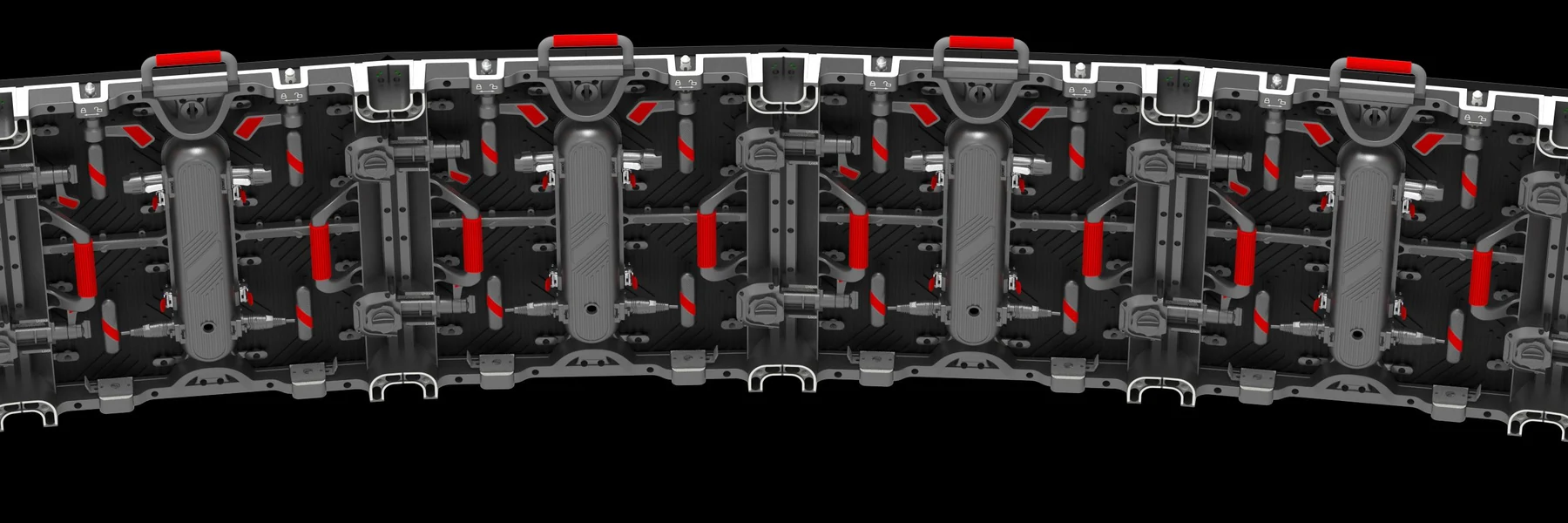
Rental and staging, P2.604–P5.95
The job: a wall that is built and struck dozens of times a year, moved in road cases, and flown from truss. Here the specification is mechanical, not optical: cabinet weight, lock durability, and how many people it takes to hang 40 m² in four hours.
The spec: 500×500 mm and 500×1000 mm cabinets, 4,500–5,500 nits, 3,840–7,680 Hz, die-cast magnesium or aluminium, quick-lock with 0–180° curvature for curved and foldable builds. The Star Series is our rental platform; the 500×1000 cabinet exists because a 500×500-only system doubles the lock count and the build time on tall stages.
The usual mis-selection: buying rental cabinets and then using them as permanent installs. Rental cabinets trade thermal headroom and service access for weight. In a fixed wall that trade is pure loss — you get shorter LED life and rear-access-only modules in a space with no rear access.
Line 04 · Creative
Creative formats — mesh, transparent, sphere
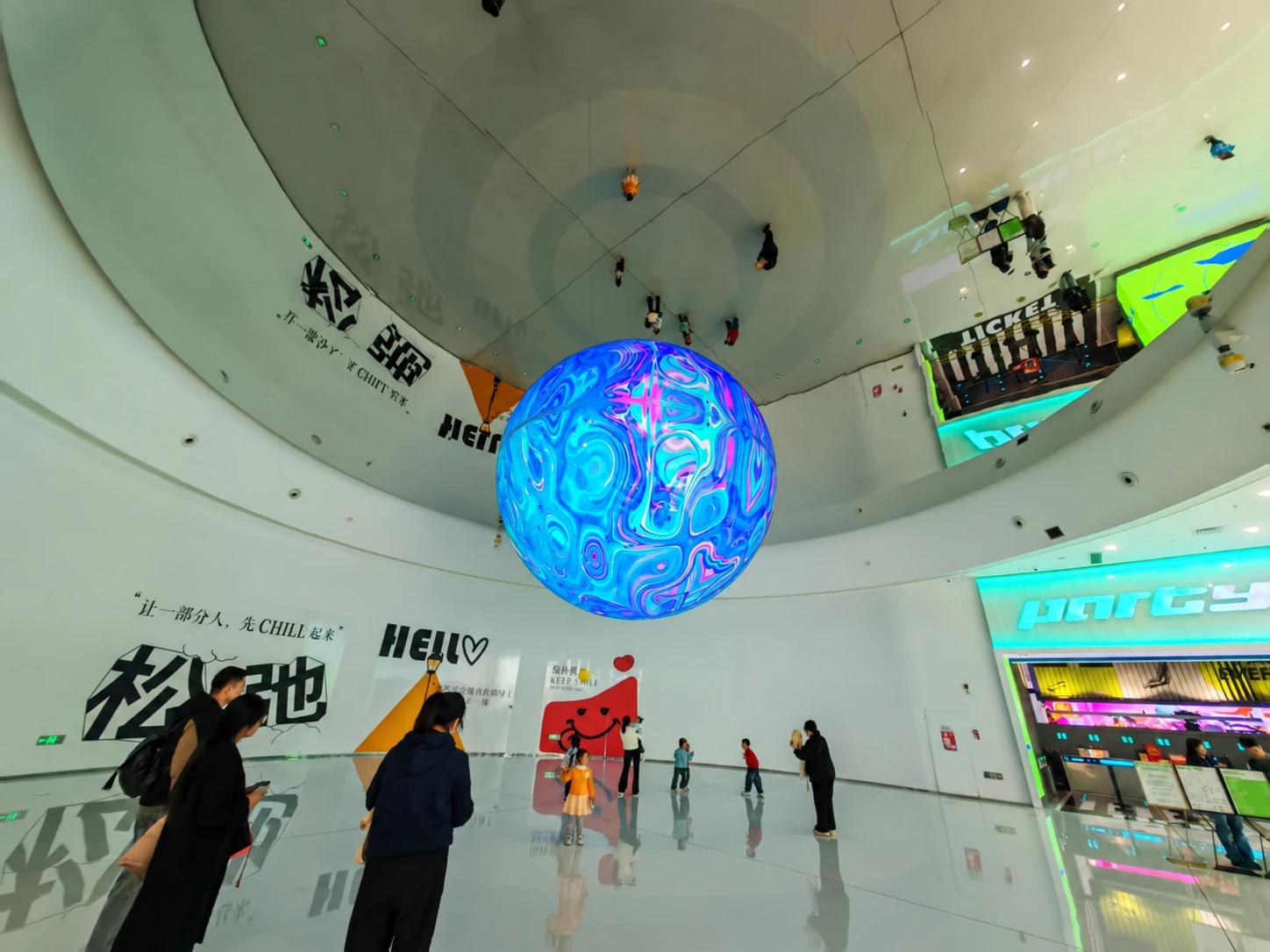
The job: geometry a flat cabinet cannot reach — a curved facade that must stay transparent from inside, a 8-metre bottle beside a building, a suspended sphere in a mall atrium, a DJ booth that is itself the display. These are the projects where the drawing matters more than the datasheet.
The spec: flexible mesh at P37.5–P100 from $100 per m² (the low pitch count per square metre is why the price is low — it is a different product, not a cheaper one); transparent film at P3.91–P10 from $730 per m² with 55–85% light transmission; sphere and custom cabinets engineered per project. Every one of these is a custom drawing, a structural calculation and usually a sample unit before production.
The usual mis-selection: treating a creative format as a cost-reduction route for a flat wall. It is not. Custom cabinet tooling, structural engineering and a sample round typically add more than the panel saving.
Pitch by viewing distance, not by budget
Pixel pitch is the distance between LED centres, in millimetres. It sets the closest distance at which the image still looks continuous. Everything else on the datasheet — brightness, refresh, cabinet size — is secondary to this one number, because pitch is what the buyer pays for. The table below is the range we actually quote from, indoor and outdoor, and it only contains pitches our four product lines can build.
| Nearest viewer | Pitch | Indoor / outdoor | Typical use | Where it goes wrong |
|---|---|---|---|---|
| 1.5–2.5 m | P0.78–P1.2 | Indoor | Broadcast studio, boardroom, close-up retail | Not specifying COB — SMD at this pitch shows a moiré pattern on camera |
| 2.5–4 m | P1.25–P1.56 | Indoor | Control room, showroom main wall, executive briefing | Ignoring heat — tight pitch runs hot, the room needs its own cooling plan |
| 4–6 m | P1.875–P2.5 | Indoor | Church, auditorium, hotel ballroom, lobby | Buying P1.5 for a room where nobody sits closer than 5 m |
| 6–10 m | P2.6–P3.9 | Indoor / semi-outdoor | Large auditorium, arena interior, conference hall | Under-brightness — at this size ambient light beats 800 nits |
| 8–20 m | P4–P6 | Outdoor | Urban landmark, street-facing billboard, plaza | Skipping the wind-load calculation — the structure, not the screen, fails first |
| 20–60 m | P6–P8 | Outdoor | City arterial road, intersection, petrol station | Forgetting the brightness sensor — full output at night is a complaint, not a feature |
| 60–150 m | P8–P10 | Outdoor | Expressway, elevated road, long-throw signage | Specifying P6 “for quality” — cost triples, image does not change |
| 150–300 m | P10–P16 | Outdoor | Highway, stadium exterior, long-distance landmark | Under-sizing the power feed — P10 at 200 m² still needs a dedicated supply |
Sitting 10 feet from a P2.5 wall and 10 feet from a P1.2 wall looks the same to your eye. The price difference is roughly three times. The most common overpayment in this industry is fine pitch bought for a room where nobody ever stands close enough to resolve it.
The one exception is camera work. A broadcast or livestream camera resolves more than the eye does, and at P2.5 the LED grid becomes visible as a crawling pattern. If the wall will be on camera, the pitch rule tightens by one full step.
Indoor vs outdoor LED video wall: four lines that actually change
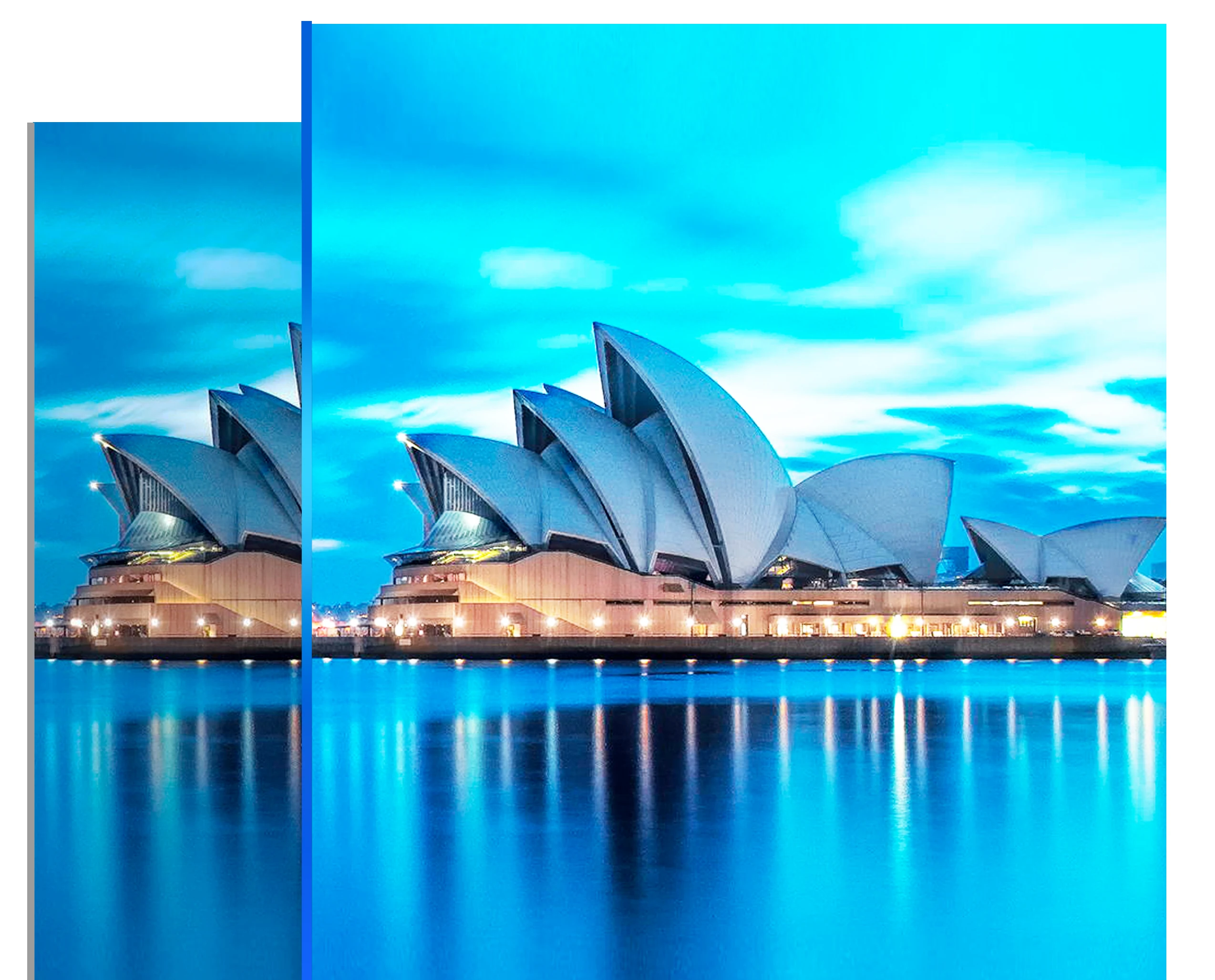
The same cabinet family is not sold for both. Moving a wall from a boardroom to a street-facing facade changes brightness by roughly a factor of twenty, adds an ingress rating, and can push more of the budget into steel than into LEDs. These are the four lines where the two diverge — and the four that tell you which one you are actually being quoted.
| Specification | Indoor LED video wall | Outdoor LED video wall | What it decides |
|---|---|---|---|
| Brightness | 400 nits calibrated on fine pitch, 600–800 nits on matrix fixed | 8,000–10,000 nits | Whether the image holds under ambient light without burning the viewer or the camera. A 10,000-nit panel run at 600 nits indoors still has to dim correctly, which is a low-grayscale problem, not a brightness problem. |
| Ingress rating | No sealed enclosure. Cabinet back is open to the room for airflow | IP65, front and rear sealed | Where the wall can physically go. An unsealed indoor cabinet on a facade fails at the first driving rain; a sealed outdoor cabinet indoors traps heat and runs louder. |
| Pitch range | P0.78–P2.5 fine pitch, P1.25–P3.91 matrix | P4–P16 | How many LEDs you pay for. Outdoor walls are read from 10 m and further, so a tighter pitch buys nothing the eye can resolve — it only multiplies the LED count per square metre. |
| Structure | Wall mount, hanging frame or ground support inside the building envelope | Steel structure sized to wind load, plus a maintenance access route | Where the money goes on a large outdoor job. On a facade the steel can cost more than the panels, and nobody quoting a screen area alone has priced it. |
Why an indoor wall should not simply be the brightest one
A boardroom or sanctuary is a controlled-light room, and the failure mode there is over-brightness. At 400–800 nits a fine pitch wall reads correctly and keeps low-grayscale detail in dark content; push it to outdoor levels and faces on camera clip, the room is lit by the screen, and the ambient sensors spend their life fighting the panel. Indoor LED video walls are specified by calibration and low-brightness grayscale, not by peak nits.
The ingress rating decides your maintenance route
Indoor cabinets are normally front service, so the wall can sit flush against a finished wall with no rear corridor. Outdoor cabinets must be sealed on both faces, which changes the cabinet design and usually the service direction too. Ask which direction the module comes out before you agree the room layout — a rear-service wall needs 600 mm behind it that most rooms do not have.
Outdoor LED video walls carry a structure cost indoors never sees
A facade wall is a structure project with a screen attached. Wind load, anchor design, corrosion treatment and safe access for maintenance all land in the quote before the first cabinet does. This is why we do not fold outdoor pricing into the per-square-metre table: a bookable figure for a roadside or DOOH wall depends on the site, not on the panel.
If the wall faces a street, the specification continues on the outdoor LED display range and the outdoor LED billboard page. If it faces a room, the pitch and cabinet choices sit on the fine pitch LED display and matrix indoor fixed pages.
Factory-direct pricing by pitch
Every number below is the published starting price on the matching product page, FOB Shenzhen, 2026. A starting price is the price of the widest pitch in that range — it is a floor for budgeting, not a quote for your wall. Once you fix size, pitch and cabinet type, we price the actual order.
1. Panel price floor, by product line
| Product line | Pitch range | Starting price | What drives the price up |
|---|---|---|---|
| Fine pitch indoor | P0.78–P2.5 | from $1,350 / m² | COB or MIP packaging below P1.5, 3,840 Hz driver ICs, cabinet flatness tolerance |
| Matrix indoor fixed | P1.25–P3.91 | from $710 / m² | Die-cast cabinet count per m², front-service mechanism, wireless module option |
| Outdoor | P4–P16 | from $615 / m² | IP65 sealing, 8,000–10,000 nit LED bins, cooling design, 9,600 Hz for camera |
| Transparent | P3.91–P10 | from $730 / m² | Light transmission target (55–85%), frame profile, glass-mount bracket |
| LED mesh | P37.5–P100 | from $100 / m² | Low LED count per m² is inherent to the format — this is not a budget substitute for a flat wall |
2. A 16 m² wall, priced two ways
The same 16 m² P2.5 indoor wall, bought factory-direct and bought turnkey from a local integrator. These figures are the ones we publish on our church cost breakdown, because that is the size most sanctuaries and mid-size boardrooms land on.
| Cost line | Factory-direct (FOB) | Local integrator |
|---|---|---|
| LED panels, 16 m² P2.5 | $11,000–16,500 | inside the turnkey figure |
| Video processor | $600–2,500 | inside the turnkey figure |
| Receiving cards and cabling | $200–500 | inside the turnkey figure |
| Mounting structure | $800–3,000 | inside the turnkey figure |
| Ocean freight | $800–1,500 | — |
| Duty and clearance (about 5%) | $400–700 | — |
| Local install and electrical | bought locally, $3,000–6,000 | included |
| All-in | $19,000–27,000 | $35,000–55,000 |
Both columns end with a working wall. The difference is who carries the engineering margin, and whether you keep the option to buy spares at component price two years later. Full line-by-line reasoning sits in our church LED screen cost breakdown — the arithmetic does not change with the room. For the same breakdown across every size and pitch we build, see LED video wall cost.
3. Three lines that quietly disappear from a quote
Spares
Budget 10% extra modules, roughly 5% of order value. When one module fails at year three and the panel series has moved on, spare modules bought with the wall are the difference between a repair and a re-panel.
Structure
Wall mount, hanging frame and ground support can differ in price by three times on the same screen area, because the deciding factor is what the building can carry — not the screen.
Electrical
A 16 m² wall draws 3–8 kW in full white. Most venues need a new dedicated circuit, and the electrician is booked after the screen arrives if nobody planned for it.
LED wall size: two sums that decide the rest of the spec
Two formulas cover almost every enquiry. Width in metres ÷ pitch in metres = horizontal pixels. A 4.88 m wall at P2.5 gives 1,952 pixels. Horizontal pixels ÷ 1,920 = number of 4K inputs you need to drive it. At 1,952 that is one 4K processor output, with almost nothing to spare.
| 16:9 size | Width × height | Area | P2.5 pixels | P1.5 pixels | Full-white draw |
|---|---|---|---|---|---|
| 110″ | 2.44 × 1.37 m | 3.3 m² | 976 × 548 | 1,627 × 913 | ~1.7 kW |
| 136″ | 3.01 × 1.69 m | 5.1 m² | 1,204 × 676 | 2,007 × 1,127 | ~2.6 kW |
| 165″ | 3.66 × 2.06 m | 7.5 m² | 1,464 × 824 | 2,440 × 1,373 | ~3.8 kW |
| 220″ | 4.88 × 2.74 m | 13.4 m² | 1,952 × 1,096 | 3,253 × 1,827 | ~6.7 kW |
Note what happens at 16:9 and P1.5: the 220″ wall crosses 3,253 pixels, which no longer fits a single 4K output. It now needs two processor outputs and a wall that is fed as two zones. That is a real cost step — a second output card, a second sending chain, and a seam in the processing that has to be invisible. Anyone who quotes a P1.5 wall this size without mentioning the processor is quoting half a system.
One honest boundary: below about 110 inches, do not buy direct-view LED. A commercial 98-inch LCD panel is cheaper, brighter for a lit room, and resolves as well at that size. Direct-view LED wins from roughly 120 inches upward, where LCD stops being manufactured as a single panel and the only alternatives are a bezelled tiling or a projector.
Four mounting routes, three times the price spread
Installation is where a budget quietly doubles. The screen is a fixed cost once the pitch and size are set; the structure is not. The four routes below cover nearly every fixed install, and the choice is decided by the building, not by preference.
| Method | Prerequisite | Cost effect | Service access |
|---|---|---|---|
| Wall mount | Load-bearing wall or a reinforced stud frame | Lowest — a steel sub-frame and brackets | Front service, magnetic modules |
| Hanging | Steel beam or truss above the wall | Medium — hanging frame plus rigging point survey | Front service, keep a walkway behind for cabling |
| Ground support | Level floor, free-standing position | Medium, but removes all wall work and structural review | Front service, fastest to reconfigure |
| Recessed | Must be designed in during the fit-out | Highest — first-fix coordination, rear chamber, finishing | Rear service, so a 600–800 mm rear void is mandatory |
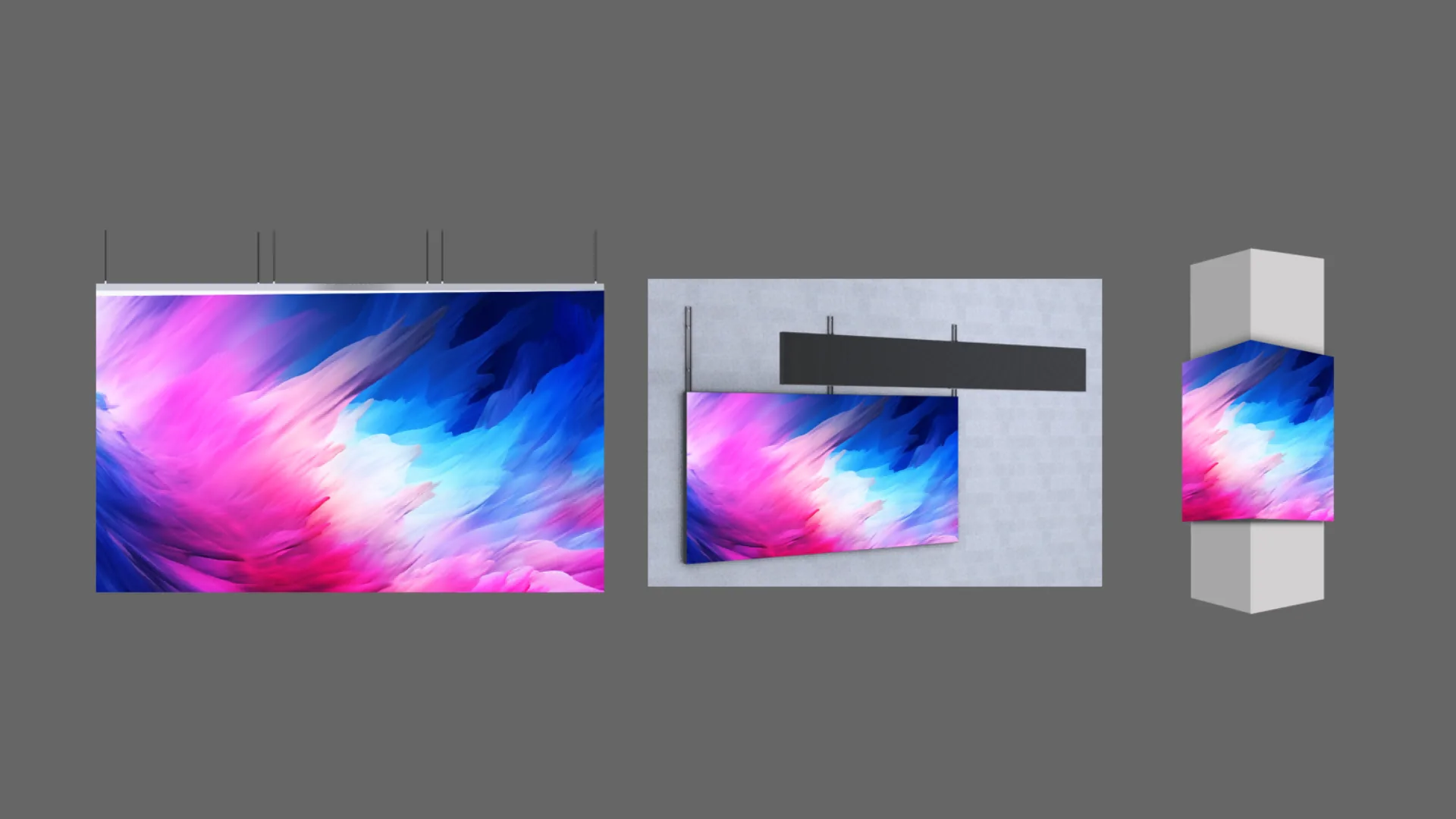
What we supply, and what we do not. JDX ships the cabinets, the processor, the receiving cards, and a dimensioned structural drawing for your installer. We do not perform local installation. That sentence belongs here rather than in the small print, because the difference between a factory-direct and a turnkey quote is exactly the install labour you buy locally — and a buyer who learns this after signing has a budget problem, not a screen problem.
The drawing we send is not a marketing diagram. It carries cabinet coordinates, fixing points, the load per square metre at each anchor, the power distribution layout and the recommended rear clearance. A competent local AV contractor can work from it. If your site has no such contractor, say so early and we will quote a ground-support option that reduces the on-site work to assembly.
Service access decides the cabinet model before it decides anything else. If the wall sits on a corridor wall with no rear void, you must specify magnetic front-service modules. That is not an upgrade you can add later — it changes the cabinet, the module retention and the price.
Four walls, and why each was specified that way
Each entry follows the same four beats: the site condition, the pitch chosen, the reason, and the outcome. A project photo without the reasoning behind it is decoration; the reasoning is what tells you whether your own room fits the same answer.
Command centre, P1.2, 24/7 duty
Site: an operations room with workstations 3 m from the wall and a wall behind the screens with no rear void. Pitch: P1.2. Why: operators read 8-point text in dashboards, which requires 3 mm-per-metre resolving power at 3 m — P2.5 would have failed on the smallest labels, not on the video feed. Outcome: three years of continuous operation on front-service modules, because rear access did not exist.
National celebration stage, 985 m²
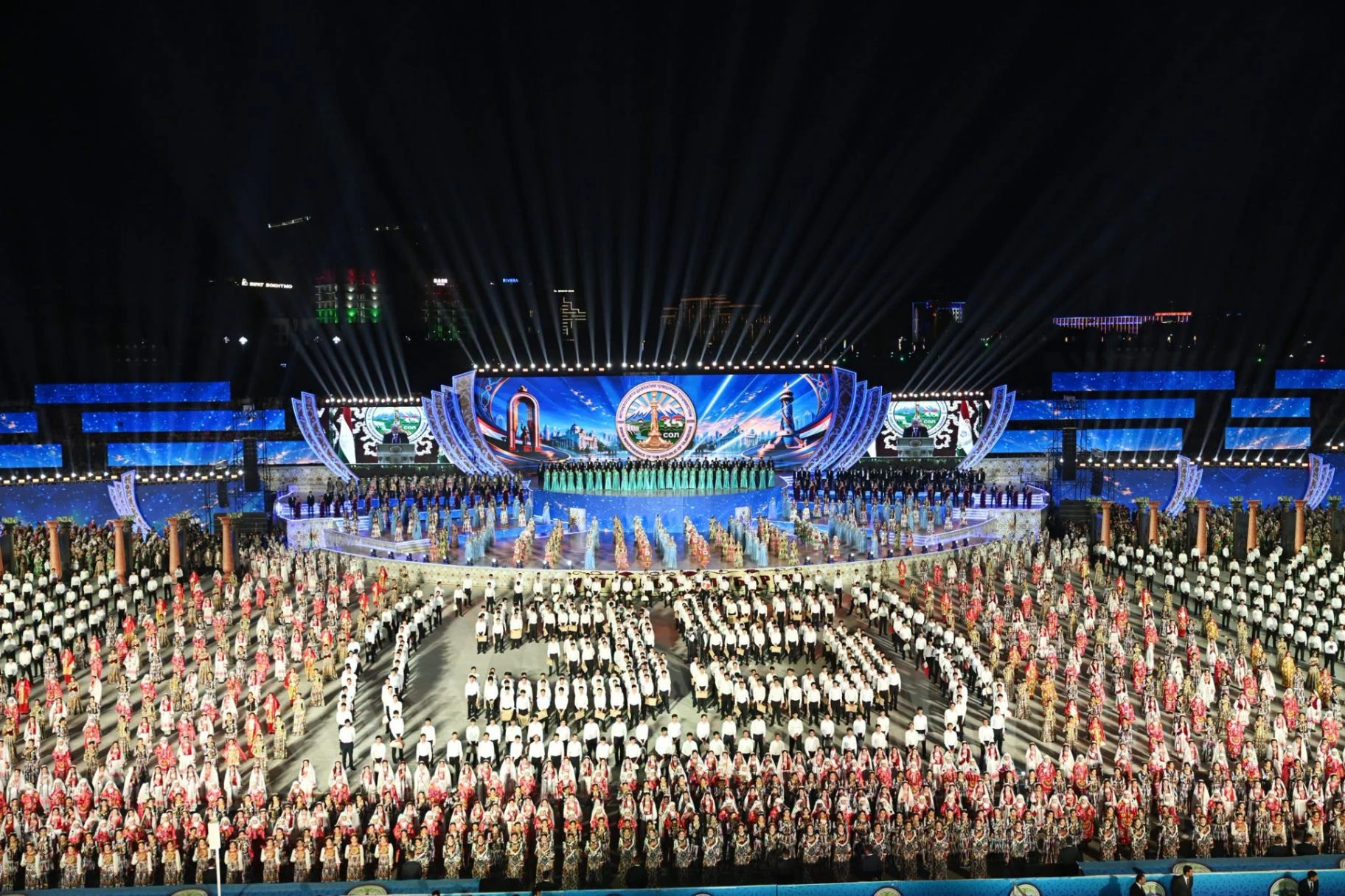
Site: an outdoor national event with a fixed build window, four separate stage zones, and no second attempt. Pitch: P3.91 at 5,000 nits across 985 m². Why: audience distance started at 15 m, so P3.91 resolved cleanly while keeping cabinet count and build hours inside the schedule; brightness was set for dusk-through-night broadcast. Outcome: zero module failures across the event, four colour zones calibrated to match on camera.
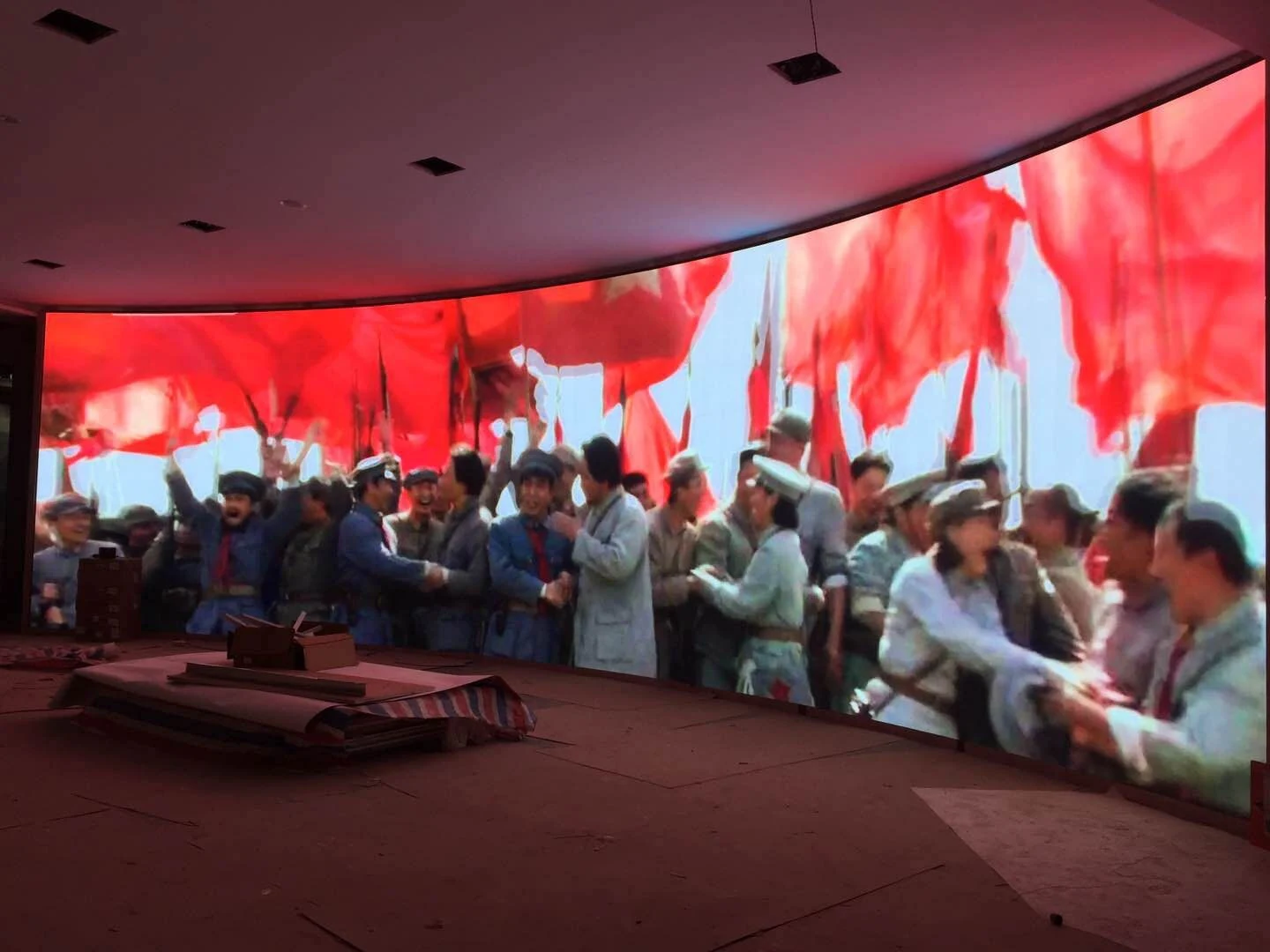
Immersive retail room, curved at P1.8
Site: a showroom where visitors walk within 2 m of the surface and the wall wraps a corner. Pitch: P1.8 on a curved cabinet. Why: the close approach set the pitch, and the curve had to be built into the cabinet rather than bent on site — bending a flat cabinet produces seams at the join. Outcome: a continuous image through 90° with no visible module step.
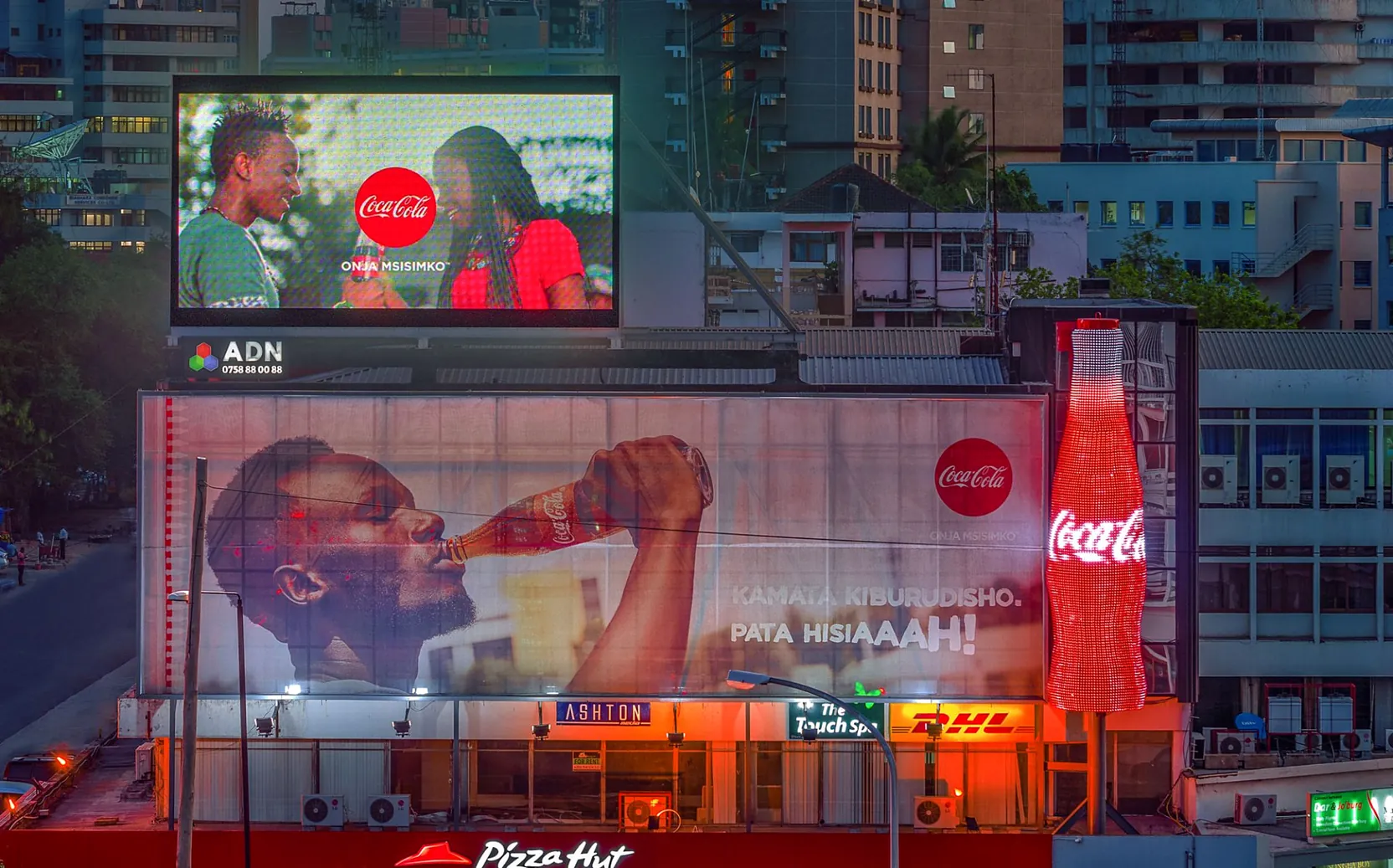
Bottle facade, 8 m, transparent mesh
Site: an 8-metre bottle form beside a building facade, visible from inside the building as well as the street. Product: custom flexible mesh. Why: a rigid cabinet could not follow the curvature, and the interior needed daylight through the surface — mesh at 60%+ openness solved both, at the cost of pixel density nobody would resolve from street level. Outcome: the shape reads as architecture by day and as a screen at night.
Lead time, packing and the paperwork
Production runs 15–25 working days on a standard indoor wall from specification confirmation, and eligible orders can be ready to ship in as little as 15 days. Ocean freight to the US adds 25–35 days. If you have a fixed opening date, plan backwards from the installation week rather than forward from the order date — the two delays that actually happen are the electrical circuit and the structural review, and both of those are local to you.
Packing
Flight cases for rental stock, export plywood crates for fixed installs, and foam-separated module cartons for spares. Sea freight is the default; air freight only makes sense on sample orders or schedule recovery.
Documents
CE and FCC declarations, RoHS statement, packing list, commercial invoice and certificate of origin. Certificates are issued against the actual model shipped, not a generic product family.
Freight mode
Above roughly 20 m² a full container usually beats LCL on cost and on damage risk, because the crates are not handled at a consolidation warehouse. Below that, LCL is normal.
Minimum order quantity is not a single number. It depends on the model and the shipping method — one cabinet as an air-freight sample is a different transaction from a 40 m² sea-freight order. MOQ is stated per item in the quotation, so you see it before you commit rather than discovering it at the deposit stage.
How to audit an LED video wall manufacturer
There are thousands of companies listing LED video walls for sale and a much smaller number of LED video wall manufacturers that own an SMT line. The seven checks below are the ones we would apply to any of the video wall manufacturers we compete against, so run them on us with the same rigour. A supplier who resists any of these is telling you something.
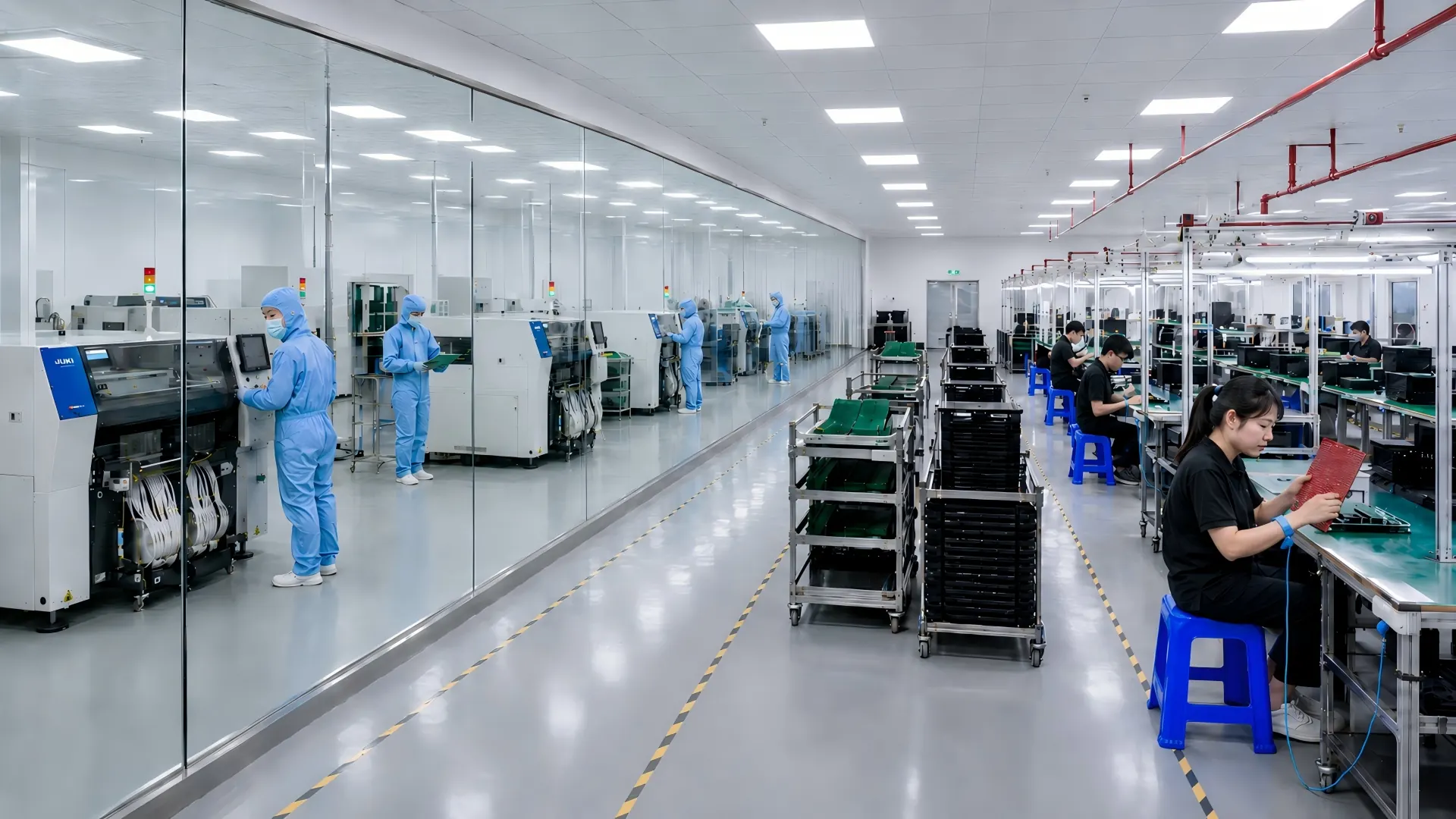
- 1. Get the business licence and the factory address. Then open the address in satellite view and look at the roof. A trading office and a production hall do not look alike.
- 2. Ask for live SMT footage, not a photo. The requirement is a pick-and-place machine with boards moving through it. An empty clean room proves nothing.
- 3. Ask for third-party test reports at your exact pitch. Brightness, chromaticity and refresh rate, measured by a lab rather than by the seller's own QA sheet.
- 4. Ask which driver IC is used. The difference between a premium constant-current driver and a generic one is the single largest reason two P2.5 quotes 30% apart behave differently after two years.
- 5. Ask which LED brand, and put it in the contract. Lamp brand is where substitution happens quietly between the sample and the production run.
- 6. Ask for three references in your own country. Then contact them without the supplier on the thread.
- 7. Buy a 1–2 m² sample first. Test it at your brightness, on your content, for a week, before the balance of the order is placed.
What you get when you buy from the plant: the cabinet, the processor and the spares from the company that assembles them, with the drawing set that goes with the actual build. What you do not get: local installation, and a single point of blame for the electrician. We would rather say that here than have it surface in week six.
Questions buyers ask every week
How much does an LED video wall cost?
Indoor P2.5 panels run about $60–95 per square foot factory-direct in 2026. A 16 m² wall is $11,000–16,500 in panels, or $19,000–27,000 complete with processor, structure and freight. Turnkey integrator quotes for the same wall land at $35,000–55,000.
What pixel pitch do I need for my viewing distance?
Divide the nearest viewing distance in metres by 1,000 to get the pitch in millimetres that still looks continuous. Three metres suggests P3 or tighter; five metres suggests P5. In practice buyers go one step tighter than the formula when the wall is on camera, and one step wider when it is pure signage.
LED video wall or LCD video wall — which should I buy?
LED if the wall must be seamless, larger than about 110 inches, curved, or viewed in daylight. LCD if the wall is small, the room is bright, and a bezel every panel is acceptable. LCD is cheaper per inch below 98 inches; above that, single-panel LCD stops existing.
Can an LED video wall be any size or shape?
Size is limited by cabinet geometry — you order whole cabinets, so dimensions quantise to the cabinet module. Shape is genuinely flexible: curves, steps, columns cut-outs, spheres and free-form meshes are all built. Non-rectangular geometry needs a drawing and usually a sample before production.
How long does an LED video wall last?
Rated LED life is typically 100,000 hours to 50% brightness, which is about eleven years of continuous running. In practice the wall is retired earlier for brightness uniformity drift than for failure. Keeping a 10% spare module set is what protects the eleventh year.
What is the minimum order quantity?
It depends on the model and how the order ships. A sample cabinet by air is a different quantity threshold from a sea-freight project. MOQ is stated per item in the quotation so there is no guessing before you ask.
Do you install, or do I need a local integrator?
We supply hardware and a dimensioned structural drawing; we do not install on site. You need a local AV contractor for mounting, electrical connection and commissioning. Most of our projects use a contractor the client already has, working from our drawing.
How long is lead time and shipping?
15–25 working days of production for a standard indoor wall, with eligible orders shipping in as little as 15 days. Ocean freight to the US adds 25–35 days. Custom geometry and creative formats add a drawing and sample round before production starts.
What is the difference between SMD, COB and MIP?
SMD mounts each LED package on the board surface — mature, serviceable, standard above P1.5. COB encapsulates the LEDs under a protective layer, giving better impact resistance and a smoother close-up image at fine pitch. MIP packages the pixels before mounting, which improves yield at very fine pitch. Below P1.5 the packaging choice, not the pitch, drives the price.
Can I get a sample panel before ordering?
Yes, and you should. A one or two square metre sample with the processor lets you test brightness, colour and viewing angle on your own content in your own room. Sample cost is normally credited against the production order.
Send your dimensions, get a layout back
Give us room width and height, the nearest and farthest viewing distance, wall construction, and whether the wall will be on camera. You will get back a cabinet layout on your actual dimensions, a pitch recommendation with the reasoning shown, and an itemised price — not a per-square-metre number with the structure, processor and freight left out of it.
JDX TECH · LED display manufacturer, Shenzhen, China · Factory and certification details