Church LED Video Wall Buying Guide: Choosing the Right LED Video Wall
Church LED Video Wall Buying Guide: Screens, Sizes & Budgets
How to Specify a Church LED Video Wall for Worship, Not for a Showroom
A church LED video wall has to do something no showroom demo ever tests. It has to stay readable from the balcony while staying gentle enough for a quiet prayer moment, and it has to be operated on a Sunday morning by a volunteer who has eleven other things to do. That is why specifying a church LED screen follows a different logic from a retail or corporate display purchase. This guide walks through the seven decisions that determine whether the wall is still serving your congregation five years from now.
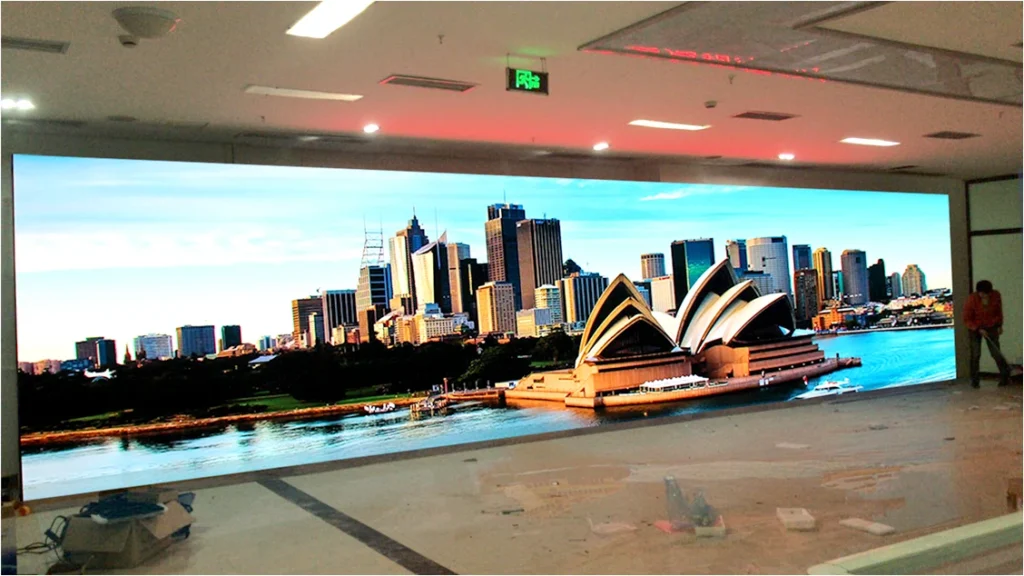
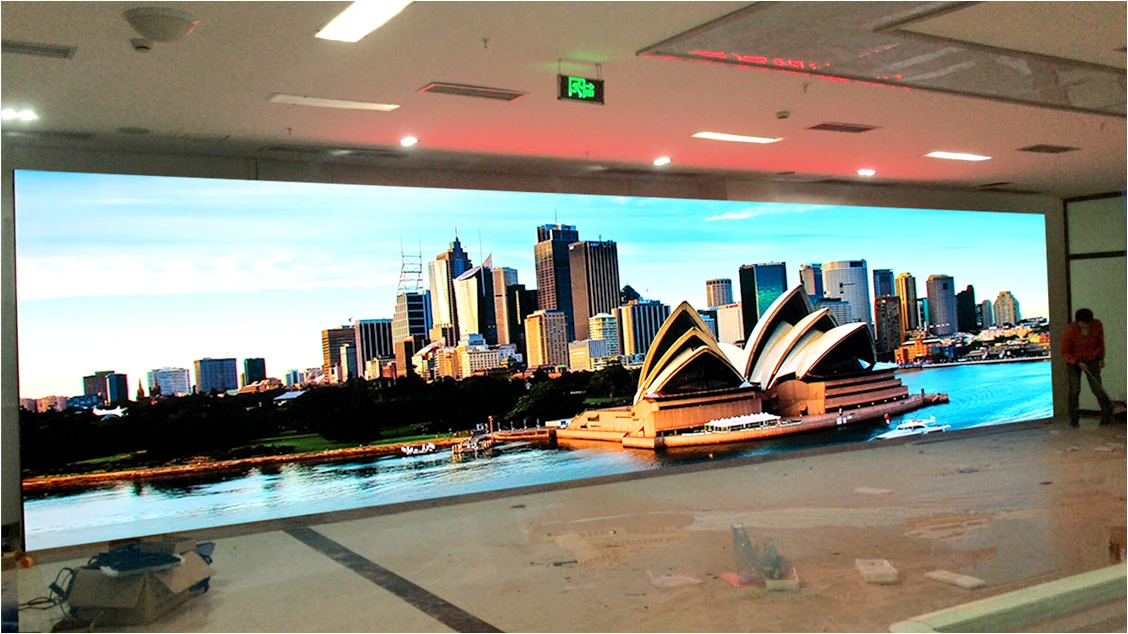
An indoor fixed-install LED wall of the type specified as a church LED video wall for a sanctuary or auditorium.
The most common specification mistake is choosing screen size first and pixel pitch second. Pitch — the distance between the centres of two adjacent LED beads — is what determines whether the back row can read a lyric line, and it is set by the farthest seat in the room, not by the wall's physical dimensions.
The working rule is that the minimum comfortable viewing distance in metres is roughly the pitch in millimetres multiplied by two to three. Worked backwards, that gives the pitch your room needs:
Farthest Viewer
Practical Pitch Range
Typical Room
Up to 10 m
2.5 mm or finer
Chapel, overflow room, lobby
10 m – 20 m
3.9 mm – 4.8 mm
Most mid-size sanctuaries
20 m – 35 m
4.8 mm – 6.0 mm
Auditorium-style churches
There is one exception that catches churches out. If you show IMAG — a live camera feed of the platform — the camera sits only a few metres from the stage, and the wall is judged at close range. A church LED video wall used for IMAG needs a noticeably finer pitch than the seat map alone suggests, which usually means a fine pitch LED display. Decide early whether IMAG is in scope; it is the single largest cost lever in the room.
2. Brightness, Contrast and the On-Camera Problem
A church auditorium is a bright room by display standards. Stage lighting, side windows and house lights all raise the ambient level, so an indoor wall here typically wants 1,000 to 1,500 nits rather than the 600–800 nits that suits a dim control room. Too dim and lyrics wash out during a fully lit worship set; too bright and the wall becomes a light source that glares at the front rows.
The specification that matters most for worship is refresh rate. Any wall shown on camera — for IMAG, a livestream or a broadcast — must run at a high refresh rate (3,840 Hz and above), or the camera will record dark horizontal bands crawling across the screen. Colour temperature matters too: a wall calibrated near 6,500 K blends with stage lighting, while a mismatched wall leaves the platform looking either orange or blue on the stream.
Ask for the panel to be demonstrated under camera, not just by eye. A church LED video wall that looks perfect to the congregation can still band badly on the livestream.
3. Permanent Install or Rental Panels?
Whether your church LED video wall is a permanent fixture or a temporary set is more consequential than most churches expect, because it determines everything downstream: how the wall is mounted, how it is serviced, and how fast it can be removed when the room needs to change.
If the wall will live in the same position every week, a fixed-install indoor LED display is the right answer. It is built for permanent mounting, it allows tighter cabinet tolerances and cleaner cable management, and it can be specified with front service access so maintenance does not require a rear corridor.
If the panels need to travel — youth events, outdoor services, touring worship nights, or a multi-purpose hall that doubles as a gym — then a rental LED display with flight cases and a quick-lock rigging system will repay its premium. Many churches land on a hybrid: a permanent wall in the main auditorium, plus a small rental set for events. The stage and event LED solutions overview shows how the two are typically combined.
4. Plan the Canvas Around Worship Content
Church content is not cinema. It is large text, a live camera feed, scripture references and the occasional graphic — usually several of those at once, in different zones of the same canvas. Plan the canvas for that, and the wall will feel twice as useful for the same money.
Two practical points. First, decide the aspect ratio from the content layout, not the other way round: a 16:9 canvas matches the camera and most presentation software, while a wider canvas suits lyric-plus-IMAG side by side. Second, remember that cabinet size constrains the achievable shapes — 500 × 500 mm and 500 × 1000 mm cabinets assemble into different rectangles, so freeze the screen dimensions before the cabinet order is placed.
Finally, budget for the layers behind the panels: a media server or presentation computer, a switcher that a volunteer can operate, and a spare-parts kit. The church LED video wall is the visible half of the system, and the other half is what the congregation never notices when it works.
5. Installation Constraints in Existing Buildings
Most church LED video wall installations are retrofits into buildings that were never designed for a large display. The wall's weight, the way it is fixed, and access for service all have to be resolved before the order is confirmed.
Confirm four things with your installer: what the structure can actually carry where the wall will hang; whether the panels will be front-service or rear-service and whether the room layout truly allows the rear clearance; how cabling and power will be routed without crossing a public area; and how the wall will be levelled so a multi-cabinet screen stays seamless. Where a wall is fitted into a niche or above a proscenium, front service is usually the only workable option.
Also plan the exterior. Many churches add an entrance sign or roadside display in the same project, and an outdoor LED display is specified on completely different criteria — higher brightness, weather sealing, and glare control for passing traffic.
6. What Actually Drives the Cost
Church LED video wall cost is dominated by four variables, and they are not equally weighted. Pixel pitch is the biggest: moving from 4.8 mm to 2.5 mm can multiply the panel price several times over, because the same physical area uses far more LED beads and driver channels. Cabinet construction — die-cast aluminium versus sheet metal, and the flatness tolerance that comes with it — is second. Redundancy and control hardware are third, and installation and freight are fourth.
That structure matters more than any single number you will read online, for one reason: prices quoted without a specification are not comparable. Two quotes for "a 6 × 3 metre church LED wall" can differ by a factor of three and both be correct, because one is a 4.8 mm rental panel and the other is a 2.5 mm fine-pitch fixed installation with dual power supplies.
When you collect quotes, ask each supplier for the pitch, the cabinet material, the brightness, the refresh rate, the drive IC, the power supply brand, the warranty terms on modules and power supplies separately, and the spare-parts lead times. Compare those rows, not the headline price. Also worth recording: LED walls have no lamps or filters to replace, so the running cost over ten years is mostly electricity, which makes a longer service life a genuine part of the value case.
7. What to Verify Before You Sign
Get these six answers in writing before the church LED video wall order goes ahead:
An aged sample — has the panel you viewed been through a burn-in cycle, or is it a fresh demo unit?
Uniformity across the batch — measured on the panels you will actually receive, not on a single showcase cabinet.
On-camera test footage — a clip shot at your intended shutter speed, so refresh rate is proven rather than claimed.
Dead-pixel and acceptance policy — the agreed limit and the process for replacement after installation.
Spare parts and service — committed lead times for modules, power supplies and receiving cards, plus who attends site.
Volunteer training and content workflow — how Sunday operators schedule and switch content, and who to call when they cannot.
Point six is the one churches most often skip, and the one most likely to decide whether the wall is loved or resented six months in. A well-specified wall with a confusing operator workflow underperforms a modest wall that a volunteer can run confidently.
Frequently Asked Questions
How much does a church LED video wall cost?
There is no useful single figure, because pitch and cabinet construction move the price more than size does. Collect three written quotes against one identical specification — pitch, brightness, refresh rate, cabinet material and warranty terms — and compare them line by line rather than by headline price.
What size church LED screen do we need?
Use the 4/6/8 rule of thumb: image height should be roughly one-sixth of the distance to the farthest viewer for general viewing, one-quarter for detailed content such as lyrics, and one-eighth where the screen is only supporting. Both this and the pixel pitch calculation start from the same measurement — the back row.
Can we keep using a projector instead?
A projector works in a darkened room with a good surface. In a lit auditorium it struggles for contrast, and it needs lamp or laser-source servicing on a schedule. An LED wall is emissive, so it holds contrast with the house lights up and has no consumable parts — which is why it is usually chosen where the room cannot be darkened.
What brightness does a church LED screen need?
Typically 1,000 to 1,500 nits for an auditorium with house lights and a lit stage. Dim rooms can use less. If the wall appears on camera, refresh rate and colour temperature matter more to the final image than peak brightness.
Should we buy or rent a church LED video wall?
Buy a permanently installed wall if it stays in one position and runs most weeks. Rent, or buy a rental-class set, if the panels must travel or the room has multiple uses. Some churches do both, with a fixed wall in the main auditorium and a small portable set for events.
This guide is part of the JDX TECH knowledge base on LED display specification. If you are planning a sanctuary wall, send us your room dimensions and viewing distances and our engineering team will recommend a pitch and a cabinet before you go to tender.