
Transparent LED Display for Retail Windows and Glass Facades
A transparent LED display turns retail windows and glass facades into digital signage while keeping views through the screen. Compare three Clear Series configurations for indoor displays, bright shop windows and outdoor installations. Choose the brightness, cabinet layout and installation method that fit your project.
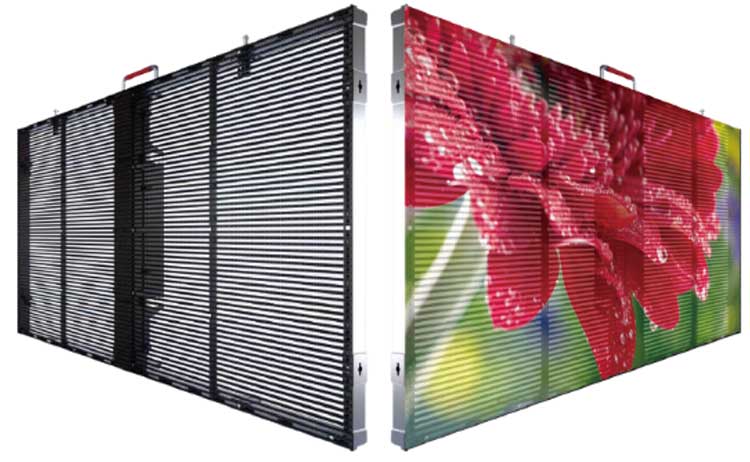
Engineered for Impact
High Transparency
An open LED structure lets light pass through the screen. The three configurations listed below have 50% transparency; confirm the specified model for your project.
Super Light-weight
About 10 kg for 1sqm. Aluminum frame light weight -- reduced by more than 50%, only 5.2kg/cabinet.
HD Visual Experience
High contrast, 160° ultra-wide viewing angle, refresh rate up to 3840Hz, no flicker, P3.91 ultra-fine pitch.
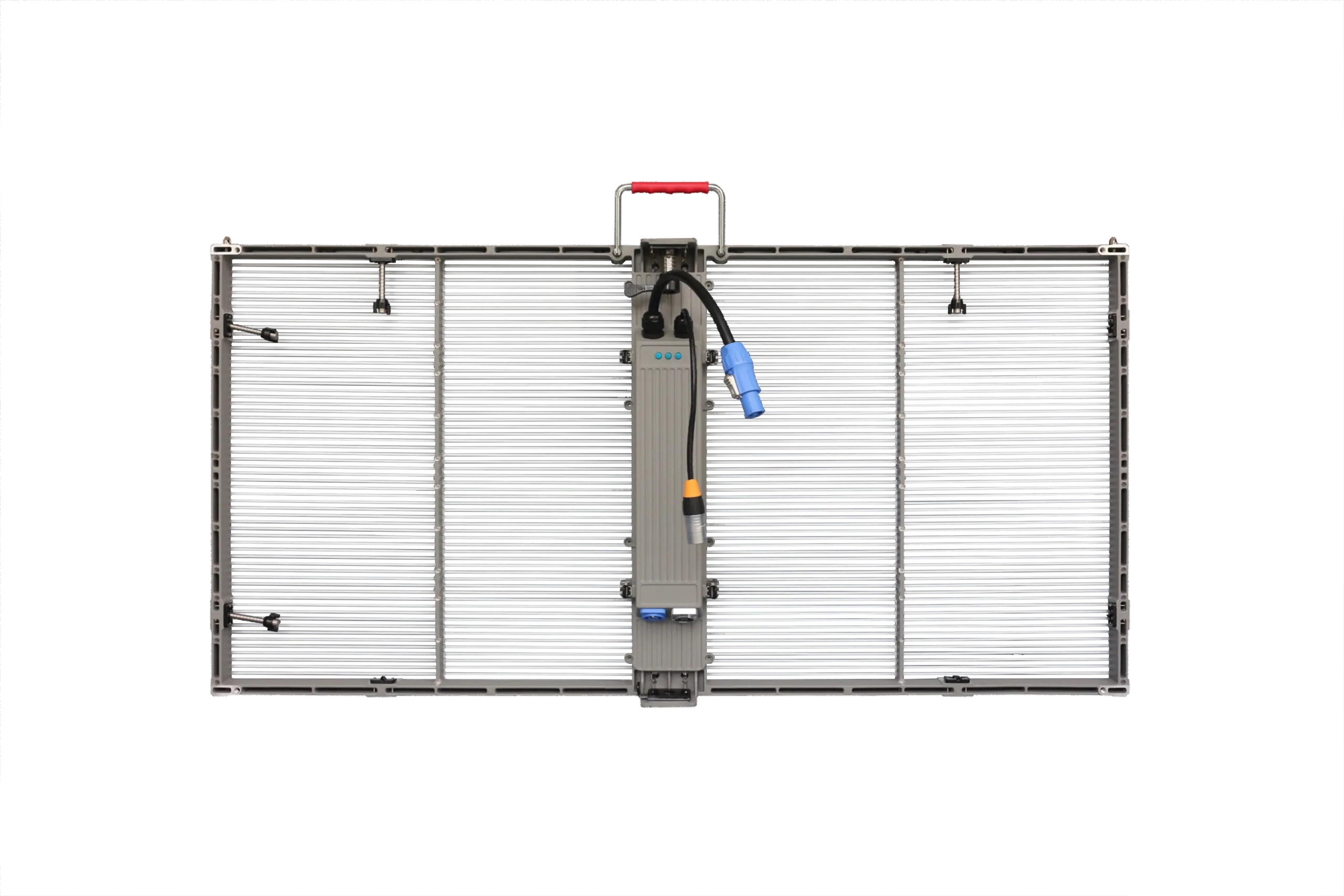
High Transparency
- Open cabinet structure; the configurations in the specification table have 50% transparency
- Light passes through the open structure, helping retain views through the glass
- High ventilation, natural convection heat dissipation, no fan required
- Indoor mounting can preserve the facade profile; check the visible frame, cable routes and daylight effect before installation
- The transparent LED screen works like shutters -- light passes through a certain angle imaging to our eyes
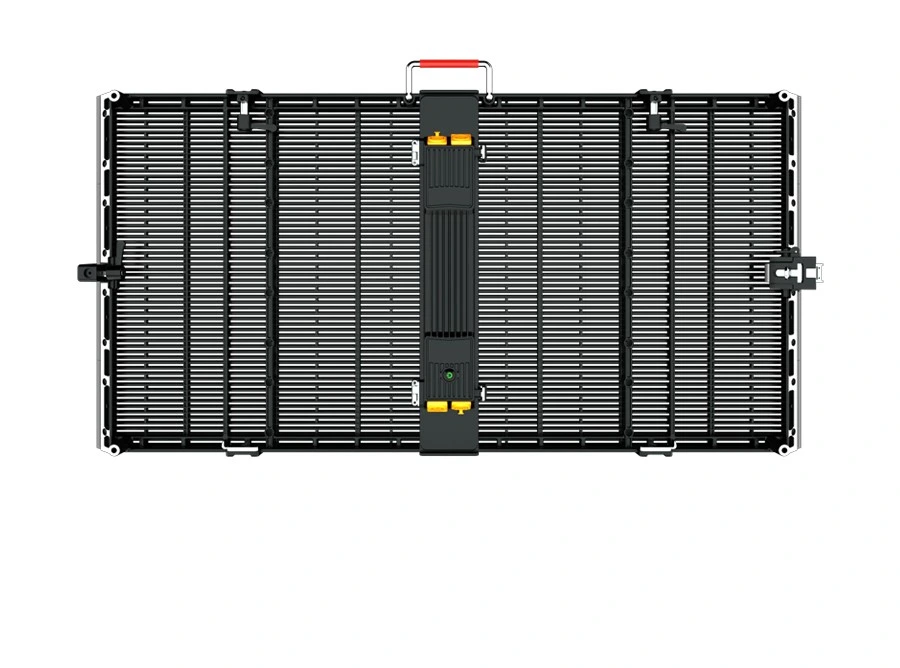
Super Light-weight
Aluminum frame light weight. Compared with the other LED Display, the weight is reduced by more than 50%, and the weight is 5.2kg/cabinet.
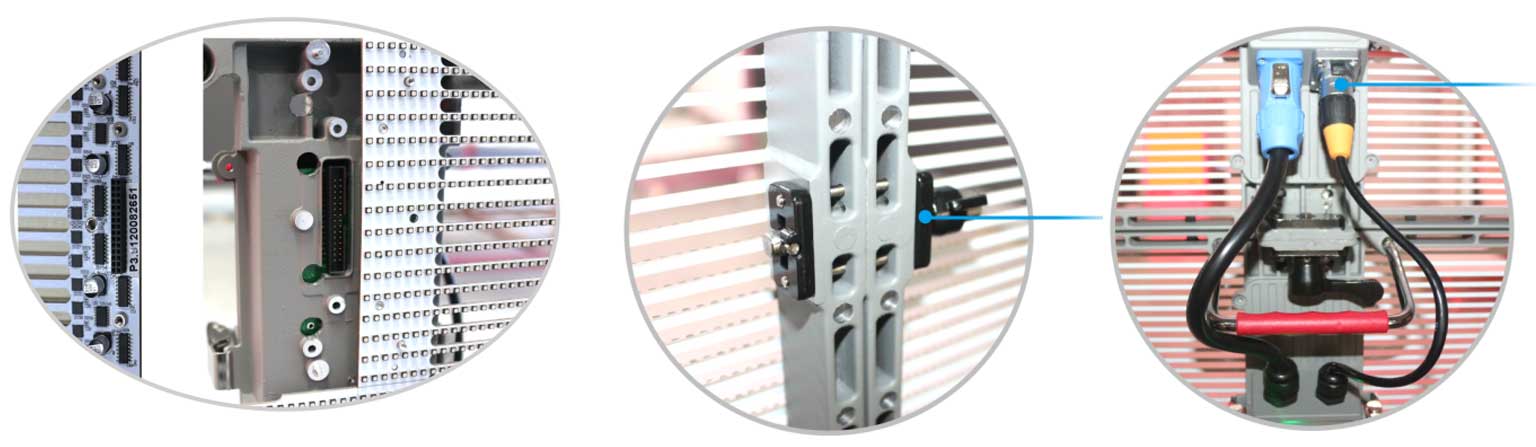
Hot-plug Design
Between PCB board and box. 5V safety voltage, simple maintenance, safe and durable.
Hidden Lock Connection
Convenient and beautiful, one person can quickly assemble.
Power & Signal Plug Connection
Built-in power supply and receiving card for seamless integration.
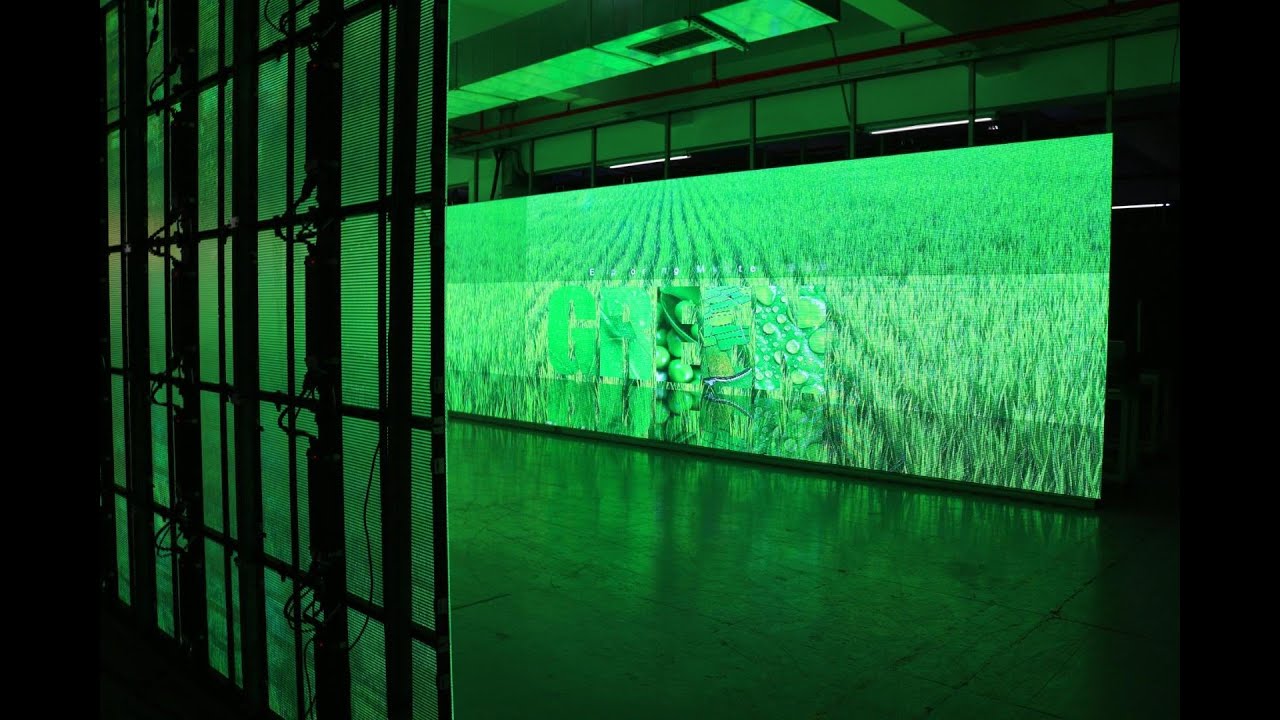
HD Visual Experience
- High contrast, the ultra-wide viewing angle of 160°, bright and colorful, attracting attention.
- Refresh rate can reach 3840Hz, no flicker, good display effect
- With a unique circuit design, the power consumption is very low.
- P3.91 ultra-fine pitch brings high-definition visual enjoyment and supports user customization.
3 Transparent LED Display Options
| Application | Outdoor | Indoor | Indoor |
|---|---|---|---|
| Pixels Pitch | 3.91(w)-7.81(h) | 3.91(w)-7.81(h) | 3.91(w)-7.81(h) |
| LED lamp | SMD1921 | SMD1921 | SMD2020 |
| Brightness | 5000nit | 5000nit | 1200nit |
| Resolution | 256*64 | 256*64 | 256*64 |
| Driver IC | ICN2153 | ICN2153 | ICN2153 |
| Scan mode | 1/8 | 1/8 | 1/16 |
| Transparency | 50% | 50% | 50% |
| Refresh rate | 3840 | 3840 | 3840 |
| View angle | 110° | 160° | 160° |
| Waterproof | IP65(F)/IP54(B) | IP43 | IP43 |
| View distance | ≥4meter | ≥4meter | ≥4meter |
| Power input | 110v~220v | 110v~220v | 110v~220v |
| Size | 1000 × 500 × 80 mm | 1000 × 500 × 80 mm | 1000 × 500 × 80 mm |
| Weight | 6.5 kg | 5.2kg | 5.2kg |
Applications
Make your Transparent LED display come alive and attract the attention it deserves.
Transparency and cabinet weight change the structural budget as much as the panels do. Our LED video wall cost guide breaks down those project-level lines.
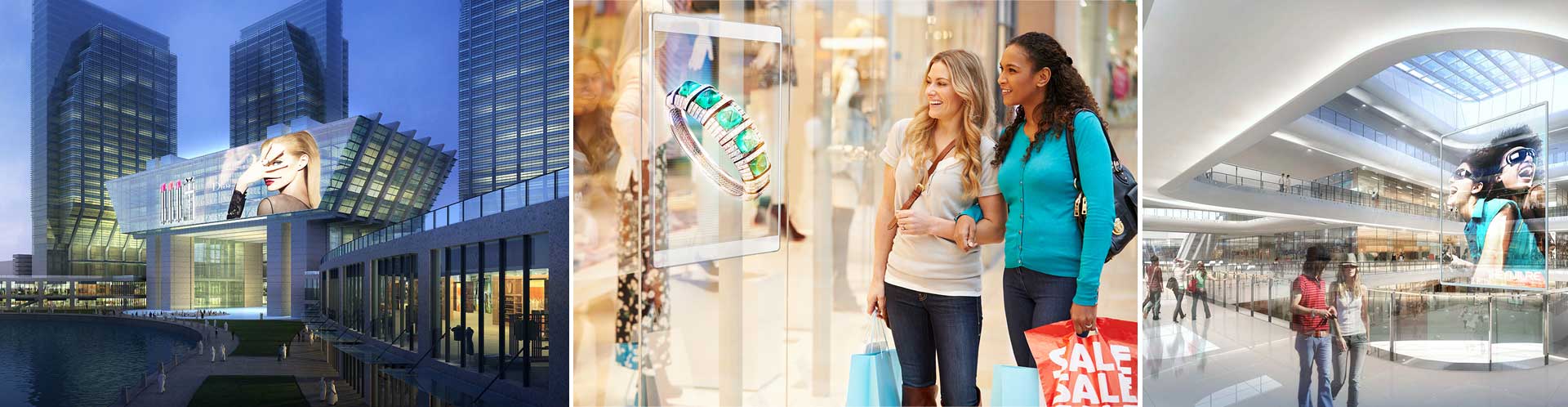
Highly customizable, this indoor transparent LED screen can be designed to create attention-getting displays. Ideal for permanent and semi-permanent displays, including shopping mall, concert displays, entertainment venues, national landmarks, and trade shows.
Clear Series LED Screen can be customized to fit your indoor architecture, no matter the size, from small displays to giant transparent LED video screens and even overhead canopies.
How to choose a transparent LED display
The right transparent LED display balances visibility through the glass with readable content from the street or shop floor. Start with the viewing distance and ambient light, then compare transparency, pixel pitch, brightness and maintenance access. A display that looks strong in a dark showroom may need a different configuration in a sunlit shop window.
Compare the 3 Clear Series configurations
Outdoor option: the listed outdoor configuration combines 5000-nit brightness with an IP65 front and IP54 rear, a 110-degree viewing angle and a 6.5 kg cabinet. Check exposure on every side of the installation, including the rear enclosure and cable connections. The front rating does not mean the entire assembly can be submerged or exposed without an installation design.
High-brightness indoor option: the 5000-nit indoor configuration is a candidate for bright retail windows. It uses SMD1921 LEDs, has a 160-degree viewing angle and weighs 5.2 kg per cabinet. Its IP43 rating differs from the outdoor option, so confirm the location is protected and select the configuration for the actual environment.
Indoor option: the 1200-nit configuration uses SMD2020 LEDs and a 1/16 scan mode for interior projects. It also lists a 160-degree viewing angle, 5.2 kg cabinet weight and IP43 protection. Compare a sample under the lighting conditions where customers will actually view it.
All three transparent LED display options in the table list a 3.91 mm horizontal by 7.81 mm vertical pixel pitch, 256 × 64 cabinet resolution, 50% transparency and a 3840 Hz refresh rate. These are configuration-specific values. Do not assume a different pixel pitch or higher-transparency model has identical brightness, weight or resolution.
Measure the glass and plan the cabinet layout
The listed cabinet size is 1000 × 500 × 80 mm. Measure the usable glass area, mullions, doors and any opening windows before deciding how many cabinets to use. Include space for the support frame, power supplies, cable routing and access to the rear or service side. A drawing should show the active screen area separately from the total installed footprint.
The specification table recommends a viewing distance of at least 4 metres. Small text and fine product details may require a closer-pitch alternative or a larger graphic. Share the nearest and farthest viewing positions so the content layout and resolution can be assessed together.
Plan installation and maintenance access
A transparent LED display needs a suitable support structure, a defined power route and an accessible controller. Check the load-bearing structure before installation rather than treating the glass as the support. Confirm cable lengths, circuit capacity and safe access with the project installer. Keep doors, ventilation and escape routes clear.
Ask the supplier to identify how LED strips, receiving cards and power supplies can be replaced in the proposed layout. Cabinet dimensions alone do not define the service clearance. Agree that clearance before fixing the screen position, particularly when the installation is close to a window or architectural feature.
Create content for a see-through screen
Use bold shapes, short messages and large product imagery instead of dense paragraphs. Test video against the real background behind the glass, because that background remains part of the viewing experience. Schedule content for opening hours and review brightness at different times of day. Watch the JDX TECH transparent LED display demonstration to assess the visual effect.
For projects where the display is part of a broader store fit-out, explore our commercial LED display solutions. For large open architectural surfaces, compare LED mesh before selecting the final system.
Transparent LED display FAQ
Can customers still see through the screen?
Yes, the spaces between the LED elements allow a view through the display. The three listed configurations specify 50% transparency. The perceived view also depends on the angle, distance, cabinet structure and displayed content. Request a sample or demonstration before approving the appearance for a shop window.
Is every transparent LED display suitable outdoors?
No. The indoor and outdoor configurations have different protection ratings. The table lists IP43 for the indoor versions and IP65 front/IP54 rear for the outdoor version. Specify rain exposure, installation height and access conditions when requesting a quotation.
What does the starting price include?
The published starting price is $730 per square metre. It is a starting point for a project quotation, not a fixed installed-system price. Ask for an itemised scope covering the selected cabinets, controller, power equipment, support structure, spares, shipping and installation, with inclusions and exclusions clearly identified.
What information is needed for a quotation?
Send the glass width and height, site photographs, indoor or outdoor location, viewing distance and expected operating hours. Include the desired screen area, mounting method and any access restrictions. These details let the team propose a cabinet layout and identify installation questions before the order is confirmed.
Can the screen match a custom window size?
Cabinets can be arranged into larger display areas, but the usable screen size depends on the selected module and frame layout. Send a dimensioned drawing so the team can confirm the closest practical arrangement. Review any uncovered glass, visible borders and access gaps before production.
Request a transparent LED display quotation with your site dimensions and project requirements.
Warranty, spare modules and service access for transparent LED screens
A transparent LED screen is usually the hardest display on a site to service. It sits behind or inside architectural glass, often above street level, and very often in a retail window where any dark patch is a visible brand problem. The expensive part is rarely the module — it is getting to the module.
That is why spares and access are planned here before production, not after something fails. Both are fixed terms, not a goodwill gesture.
2 years standard, up to 3
Covers LED modules, cabinets and structural parts, power supplies, receiving cards and JDX-supplied control hardware. A 3-year term applies only where your written quotation states it; otherwise the term is 2 years.
1 free spare module per 20 m²
A 20 m² shop window ships with 1 spare module; a 60 m² facade with 3. They travel in the same shipment, so the part is on site before the problem is. Extra spares can be added at cost.
Access planned at layout stage
Maintenance direction is agreed while the cabinet layout is drawn — front service where the glass allows it, rear service where the structure provides it. Access determines cabinet sizing, not the other way round.
If a section goes dark
Send photos of the affected panel and its location — window elevation or facade reference, plus the cabinet serial number.
Verdict within 2 business days. A dark section is often a power or signal-chain issue rather than a failed module, so we check the control side remotely first — no site visit, no downtime for parts that are not needed.
Swap from your spares, following the access method agreed at layout stage. We send a short video for your exact cabinet type, so your own crew can do it.
Spares exhausted inside warranty? Free dispatch within 3 business days of the verdict.
Outdoor and semi-outdoor installations: coverage assumes the screen is operated within its rated IP level, rated ambient temperature and the wind-load plan agreed for the project. Water or dust ingress beyond the rated IP level, and damage from unstable mains or missing surge protection, fall outside the warranty — which is why we confirm the electrical environment at quotation stage rather than after installation.
Transparent LED display is quoted by screen area. The final price depends on pixel pitch, transparency level, brightness and order quantity. Send your glass area and viewing distance and we will return an itemised quotation.
Ready to Transform Your Display?
Share your project requirements and our team will respond within one business day with a tailored LED display solution and quotation.
Request a Quote
Fill in the form below and our team will get back to you shortly.