
LED Wall Guide 2026: Panels, Pixel Pitch, Costs & Buyer Checklist
Everything a buyer needs to specify an LED wall in 2026: panel types and pixel pitch, how size and configuration are calculated, full project cost and quote scope, rental versus fixed install, and a 7-point pre-purchase checklist.
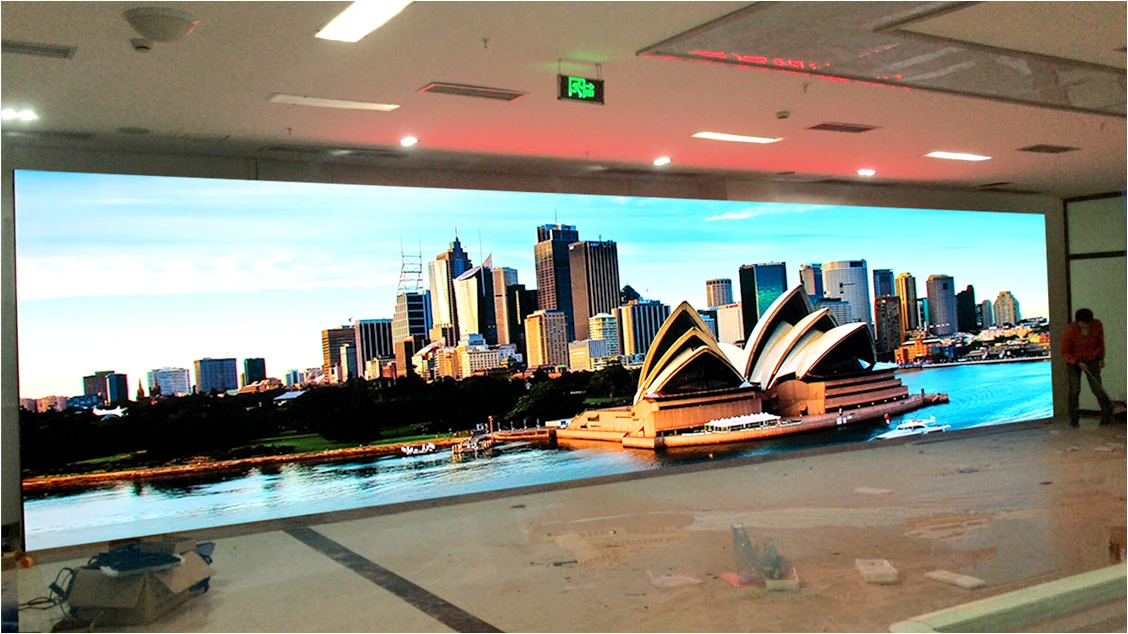
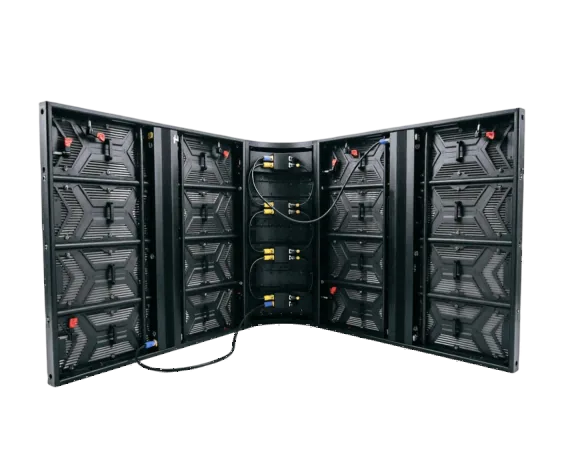
An LED wall is a large-format display built from modular LED panels — also called cabinets — that are tiled together and driven by a sending/receiving control system. Unlike a single LCD screen, an LED wall scales to almost any width or height, stays bright in daylight, and can be built as a flat wall, a curved surface, a 90° corner or a suspended installation. That flexibility is why LED walls now dominate stadium perimeters, corporate lobbies, retail flagships, control rooms, live events, concert stages and houses of worship.
The purpose of this guide is practical. Most buyers arrive with three questions: what panel do I need, how big will it be, and what will it cost? This page answers those in order, then adds the specification details that separate a display that still looks good in year five from one that becomes a maintenance problem in year one. If you are comparing quotes right now, the checklist at the end will help you screen suppliers quickly.
LED Wall Panels and Pixel Pitch
An LED wall panel (or cabinet) is the repeating building block of the whole screen. Every panel carries a fixed grid of LED pixels, a driver IC, a power supply and a receiving card, and locks mechanically to its neighbours with a tolerance measured in tenths of a millimetre. The single most important number on any panel spec sheet is pixel pitch — the centre-to-centre distance between two adjacent LEDs, written as P1.2, P2.5, P3.9 and so on. The smaller the pitch, the finer the image, and the higher the cost per square metre.
Pitch is chosen by minimum viewing distance, not by budget alone. A smaller pitch can support closer viewing, but a pitch-to-distance rule is only an initial shortlist. Confirm screen size, content detail, audience eyesight and camera positions with representative material at the planned viewing distance. Sit too close to a coarse pitch and individual LEDs become visible; pay for a fine pitch you cannot use and you overspend.
| Pixel Pitch | Best Viewing Distance | Typical Application | Environment |
|---|---|---|---|
| P0.9 – P1.5 | 1 – 2 m | Boardrooms, control rooms, broadcast studios | Indoor |
| P1.8 – P2.5 | 2 – 3 m | Retail flagships, lobbies, showrooms, churches | Indoor |
| P2.6 – P4 | 3 – 5 m | Conference stages, shopping malls, museums | Indoor / semi-outdoor |
| P4 – P6.6 | 5 – 8 m | Rental stages, event backdrops, façades | Indoor / outdoor |
| P6.6 – P10+ | 10 m + | Billboards, stadium screens, building media façades | Outdoor |
Indoor panels
Fine pitch (P0.9–P2.5), high refresh rate, wide colour gamut and cable-free front or rear service. Built for close viewing and camera work.
Outdoor panels
IP65/IP66 rated, 5,000–10,000 nit brightness, UV and salt-spray resistant. Designed for daylight readability and weather durability.
LED Wall Size and Configuration
Once the pitch is fixed, LED wall size is set by two constraints: the physical space the screen must fill, and the resolution you want the audience to see. A common starting point is to work backwards from a target resolution. If you want a 1,920 × 1,080 wall at P2.5, each panel of 480 × 270 mm carries 192 × 108 pixels, so the wall needs ten panels across and ten down — roughly 4.8 m wide by 2.7 m high.
LED wall configuration then decides how those panels go together. A flat wall is simplest and cheapest to install. Curved and corner configurations use cabinets with an adjustable arc, letting you wrap a lobby column or a 90° corner without visible seams. Suspended and floor-standing structures trade structural cost against service access. Whatever the shape or aspect ratio, the rule is the same: every panel should be reachable for maintenance without dismantling the wall.
“Design the service access first. If a technician cannot reach panel 47 on a Monday morning, the cheapest wall becomes the most expensive.”
Front-service versus rear-service is decided at specification, not at installation.
How Much Does an LED Wall Cost?
LED wall cost includes more than the cabinets. Screen area, pixel pitch, image requirements and operating environment shape the hardware quote; control, structure, transport, installation and service shape the complete project budget. There is no reliable universal per-square-metre price for every configuration.
Use a current written quote for the selected model, currency and quantity. Compare the same included items and delivery scope across suppliers. The checklist below identifies what to price separately; it is not a market price list.
| Budget item | What to confirm | Quote comparison |
|---|---|---|
| LED cabinets | Model, pitch, cabinet format, resolution, quantity, image requirements and environment | Cabinet subtotal and spares; specify whether the price is per cabinet or per m² |
| Control and signal | Processor, player, inputs, mapping, cables and any agreed backup | Included models and capacity, separately priced optional equipment |
| Structure and installation | Mounting, service access, site survey, electrical work and commissioning | Supplier scope versus local contractor scope; approved support and load plan |
| Packing and delivery | Cases, packed weight, destination, delivery term and named place | Freight, insurance, import charges and local delivery responsibilities |
| Service and spares | Compatible spare parts, training, repair process and written warranty | Covered components, exclusions and shipping or labour responsibilities |
| Operating costs | Actual power at planned brightness, hours, electricity tariff, maintenance and content work | Use the same period and assumptions; separate maximum power from expected consumption |
A 10 m² wall: from area to budget
A 4 m × 2.5 m wall has an area of 10 m². If the selected cabinet is 500 × 500 mm, the layout is 8 cabinets across and 5 high: 40 cabinets, excluding spares. This is a geometry example, not a claim that every product uses that cabinet format.
If the confirmed cabinet-only quotation is Q per m², the cabinet subtotal is 10 × Q. If quoted per cabinet, use 40 × the confirmed cabinet price. Add control, support, installation, packing, delivery and applicable charges only when they are not already included. Keep all figures in the same currency and avoid counting the same item twice.
What is missing from a low headline price?
Check whether two quotes include the same cabinet specification, processor, mounting accessories, cases, spares, commissioning and delivery responsibilities. An unpriced exclusion belongs in the comparison before you choose a supplier. A lower cabinet price can still produce a higher complete project cost.
Budget for ownership, not just purchase
For electricity planning, use average power measured at your intended brightness: kW × operating hours × the applicable electricity rate. Then consider maintenance, repairs, content operations and storage where relevant. Do not substitute maximum rated power for normal consumption or promise a fixed saving without a measured baseline.
Rental service or equipment purchase?
Compare local hire quotes including crew and transport with the ownership cost of the same suitable system over the planned programme. Utilisation and service responsibilities determine the result; there is no universal payback period. JDX rental LED pages describe equipment procurement for rental fleets. Confirm local hire or installation availability separately.
For a project-specific LED wall price, the variables that move the number most are pitch, total area and whether the installation is indoor or outdoor. Send your wall dimensions, content, viewing positions, venue, delivery location and required service scope to request an itemised project quote. Confirm its validity date and exclusions before comparing totals.
LED Wall Rental vs Fixed Install
LED wall rental suits events where the screen travels: concerts, conferences, product launches, expos and weddings. Rental panels are built around quick-lock frames, are lighter per panel, ship in wheeled flight cases, and are designed to be assembled and struck by a small crew in hours. The trade-off is a narrower brightness and reliability envelope than a fixed installation, and a lower duty cycle per panel.
A fixed installation is the opposite: panels are chosen for lifespan, colour consistency and service access, then mounted permanently with the structure, power and control designed for that specific wall. If the screen will stay in one place for years and must look correct on camera every day, fixed install is the better economics. Many buyers run both — a permanent lobby wall plus a rental kit for travelling events.
Choose rental if…
The screen moves between venues, setup time is measured in hours, and panels must survive repeated transport.
Choose fixed install if…
The wall stays in one place, colour consistency and lifespan matter most, and the structure can be designed around it.
LED Walls by Application
LED Wall for Church
A church LED wall is usually an indoor P2.5–P4 installation behind or beside the stage, sized so lyrics and scripture read clearly from the back row. Priorities are low-glare brightness, consistent colour across the whole wall, and quiet operation — the screen sits next to the pulpit, so it must not hum or flicker on camera.
Outdoor LED Video Wall
An outdoor LED video wall is specified for daylight visibility and weather. Look for IP65 or better front and rear sealing, 5,000–10,000 nits, automatic brightness control, and a coarse pitch matched to the audience distance. Outdoors the structure and power design usually outweigh the panel choice in cost terms.
Corporate & Control Room Walls
For boardrooms, lobbies and control rooms, the wall is a working surface. Fine pitch, 24/7 duty rating, redundant power and signal paths, and front service access matter more than raw brightness. See our control room video wall solutions for the system-level detail.
Retail, DOOH & Façade Walls
Retail and digital-out-of-home walls sell from a distance and up close at once. They pair high brightness with accurate colour for brand work, and are increasingly specified with transparent or mesh options where daylight and air flow must reach the building behind. Explore our outdoor LED display range for façade-grade panels.
Where the LED Wall Industry Is Heading in 2026
LED Wall Buyer's Checklist
Seven questions to ask before you sign. If a supplier cannot answer these clearly, keep looking.
Pitch versus distance. Does the proposed pitch match your closest viewer, or is it over-specified to inflate the quote?
Colour consistency. Are panels brightness- and colour-binned as a matched set, so one batch does not look different from the next?
Service access. Can each panel be reached for repair without dismantling the wall — and is the answer front service or rear service?
Duty cycle. Is the panel rated for the hours you will actually run it, especially for 24/7 control room and DOOH use?
Control system. Which sending and receiving cards, and which control platform, drive the wall — and are spares available locally?
Power and weight. What is the maximum power draw per square metre and the structural load, so your electrician and rigger can plan?
After-sales. What is the warranty, the spares lead time, and the remote-support arrangement for a wall that is already in service?
LED Wall FAQ
What pixel pitch do I need for an LED wall?
Shortlist pixel pitch using the closest viewing position and content detail, then test representative material. Screen size, resolution and viewer needs matter; there is no single pitch-to-distance rule that guarantees comfortable viewing.
How much does an LED wall cost per square metre?
There is no single reliable rate for all LED walls. Request a current quote for the selected model, screen size and quantity, with currency, validity date and scope. Confirm cabinets, control, structure, installation, spares and delivery responsibilities before comparing per-square-metre prices.
Is an LED wall the same as a video wall?
An LED video wall is one type of video wall, built from tiled LED panels rather than LCD tiles. LED walls have no visible bezels, scale to almost any size, and stay bright in daylight, which is why they are preferred for large-format and outdoor applications. See our fine pitch LED display page for indoor video-wall detail.
Should I rent or buy an LED wall?
Rent or buy a rental-spec wall if the screen travels and setup time is short. Buy a fixed-install wall if it stays in one place for years and must look consistent on camera. Many projects combine both — a permanent installation plus a rental kit for events.
Ready to Specify Your LED Wall?
Send us your wall dimensions, viewing distance and whether the installation is indoor or outdoor — we will come back with a panel recommendation and an itemised quote.